

LITTLE ROCK, Ark. — The Islamic Center for Human Excellence (ICHE) is developing a residential project called New Africa in Little Rock’s John Barrow neighborhood, featuring single-family homes, mosque space, an Islamic school, and community facilities on approximately six acres.
The Little Rock Planning Commission approved a revised Planned Community Development for the project on December 3, 2020, in a unanimous 10-0 vote.
Project Details and Features
Plans call for up to 22 single-family homes on the site, with several already constructed and occupied. Additional elements include nearly 10,000 square feet of mosque and community space, an Islamic school, a health clinic, a community garden, a playground, and parking areas.
The development, rooted in concepts popularized by the American Society of Muslims, seeks to create a model community guided by Islamic principles. Organizers have described it as an effort to build inclusive, Quran-centered living while addressing neighborhood needs.
The Bill of Assurance
Prospective buyers must sign a Bill of Assurance, a private covenant document that runs with the land. It includes architectural and maintenance standards, and states that the development’s purpose is “creating a wholly-owned residential Al-Islamic community conforming to the social guidelines given in the Quran.”
More Read

This includes enforceable rules aligned with Quranic moral codes, such as restrictions on alcohol, with ongoing oversight by ICHE or the New Africa Homeowners Association in perpetuity. The covenants function similarly to standard HOA restrictions found in many U.S. subdivisions and are enforceable through civil means.
Background and Earlier Efforts
ICHE has roots in Little Rock’s Muslim community, which traces back decades. Planning for New Africa began in the 1990s, with initial homes built around 2007. Earlier, more ambitious plans were scaled back or paused around 2017 before the 2020 rezoning approval.
The project draws on models from other American Muslim communities emphasizing self-reliance, education, and community life.
More Read

Reactions and Broader Context
The development has drawn attention and debate in Arkansas and nationally. Supporters view it as a legitimate exercise of private property rights and religious freedom, comparable to other faith-based or culturally focused housing projects. Critics raise concerns about the creation of enclaves that prioritize religious guidelines and question the implications for assimilation and local governance.
In April 2026, a state legislative proposal aimed at limiting Sharia influences in property matters was discussed in committee but did not advance.
Legal Framework
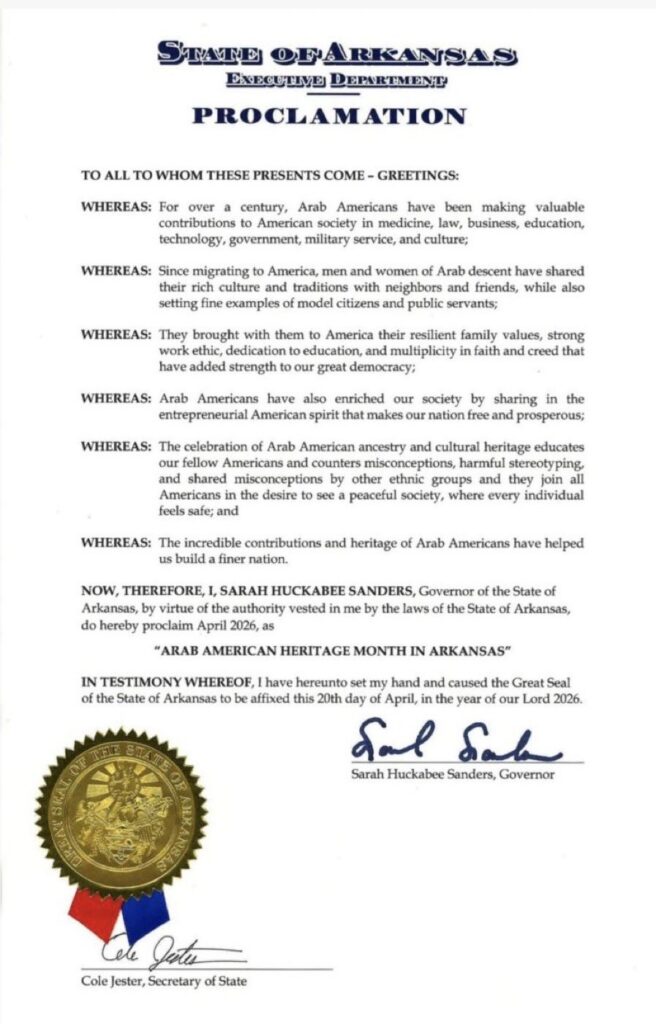
Source: Arkansas Executive Department Public Records Archive
Under U.S. law, private parties may establish deed restrictions and homeowners association rules, provided they comply with fair housing laws and do not violate constitutional protections. The New Africa Bill of Assurance is a contractual matter between buyers, sellers, and the association not a replacement for Arkansas or federal law. Residents remain fully subject to all applicable public statutes and ordinances.
City planning documents emphasize compliance with zoning and land-use regulations. The project has been presented as an improvement to the area through private investment.
Ongoing Status
As of 2026, multiple homes are occupied, and further development continues under the approved framework. The initiative reflects broader trends of faith communities creating intentional residential spaces in the United States.
For official details, refer to Little Rock city planning records for the New Africa Development (Z-2502-F and related filings). The project continues to highlight ongoing conversations about religious liberty, community planning, and cultural integration in American cities.