


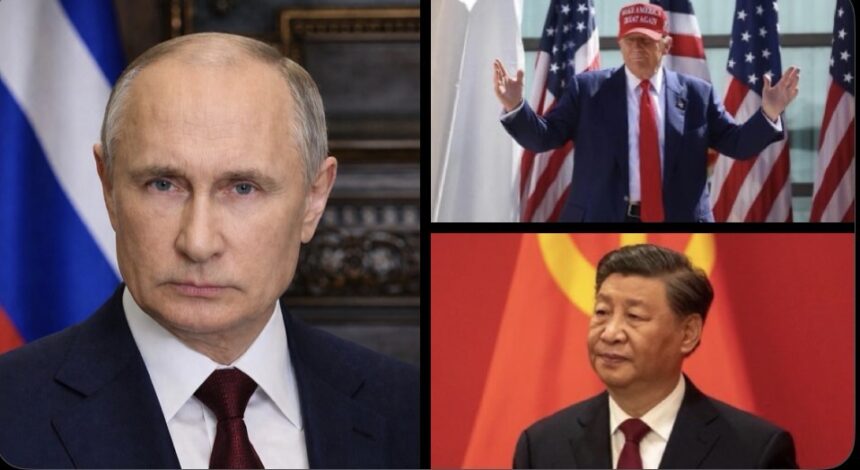
In a notable signal of pragmatic diplomacy, Russia has expressed interest in pursuing joint economic projects with both the United States and China, highlighting sectors such as energy and Arctic development as prime areas for collaboration. The announcement, delivered by Kirill Dmitriev, CEO of the Russian Direct Investment Fund (RDIF) and a key presidential envoy, comes as Russian President Vladimir Putin meets with Chinese President Xi Jinping in Beijing.11
Key Statements from Kirill Dmitriev
Speaking during engagements in the Chinese capital, Dmitriev emphasized a forward-looking approach that transcends traditional bilateral divides. “We see that projects should not be divided there into Russian-Chinese or Russian-US,” he stated, underscoring that global prosperity stems from partnerships rather than restrictions. This stance reflects Moscow’s strategy to attract investment and technology while navigating complex international relations strained by sanctions and geopolitical rivalries.17
Dmitriev noted that the RDIF is actively exploring specific initiatives involving both China and the US, building on more than 50 existing joint projects with Chinese partners in energy, infrastructure, technology, and logistics.21
Deepening Russia-China Ties as Foundation
The timing of these remarks is particularly significant. Putin’s visit to Beijing builds on longstanding Russia-China ties, which have flourished in recent years with bilateral trade surpassing $240 billion and robust cooperation in energy projects, including expansions of the Power of Siberia pipeline and Arctic LNG developments. China has become a vital partner for Russia, providing capital and markets as Western sanctions limit access to European finance and technology.7
These partnerships have extended to the Northern Sea Route, where joint investments in ice-class vessels and port infrastructure are enhancing connectivity between Asia and Europe. Dmitriev’s presence in Beijing with a portfolio of new proposals signals continuity and expansion of this economic alignment.12
More Read

Outreach to the United States and Trilateral Potential
Yet Dmitriev’s comments also extend an olive branch toward Washington. Russia is reportedly eyeing trilateral frameworks that could involve American companies in Arctic energy exploration, rare earth minerals development, and other resource projects. This aligns with earlier discussions between Russian and U.S. officials on Arctic hydrocarbons and potential infrastructure links.19
Dmitriev has previously floated ambitious ideas, such as partnering with U.S. firms on rare earth deposits and even a proposed Bering Strait tunnel linking Russia and Alaska — a symbolic and practical project estimated at $8 billion that could unlock joint resource exploration.20
For the United States, such cooperation could offer strategic benefits. The Arctic region holds vast untapped reserves of oil, gas, and minerals, critical for energy security amid global transitions. Joint ventures might improve safety standards for shipping, advance scientific research on climate impacts, and reduce risks of unilateral militarization in the High North. Analysts note that while U.S.-Russia relations remain tense over issues like Ukraine, pragmatic economic engagement could serve mutual interests.23
More Read

Strategic Benefits for China and Global Implications
China, positioned as the world’s manufacturing powerhouse and a major energy importer, stands to gain from diversified supply chains and enhanced Arctic access via the Northern Sea Route. Beijing has already invested heavily in Russian LNG projects. Trilateral involvement could stabilize these efforts, bringing in U.S. expertise in drilling technology or environmental management while diluting over-reliance on any single partner.5
This outreach occurs in a rapidly evolving multipolar world. Russia, facing sustained Western pressure, has pivoted eastward but appears unwilling to put all eggs in one basket. Deepening ties with China provide a buffer, yet Moscow recognizes the value of balanced relationships. Dmitriev’s Harvard MBA background and track record in sovereign wealth investments lend credibility to these proposals.19
Challenges Facing Trilateral Cooperation
Challenges abound, of course. Geopolitical tensions, particularly around Ukraine, continue to cast long shadows. Sanctions complicate financing and technology transfers, while differing strategic priorities among the three powers could derail concrete deals. The U.S. maintains a wary eye on Russia-China military cooperation, and China balances economic gains with its broader diplomatic goals.4
Environmental and indigenous concerns in the Arctic add another layer. Rapid melting ice opens new routes and resources but heightens risks of spills and ecosystem disruption. Any trilateral projects would need robust frameworks for sustainable development, involving governments, private sectors, and local communities.
Broader Economic and Market Context
Broader implications extend beyond economics. Success in joint initiatives could foster trust-building in other areas, from AI governance to space exploration. Market reactions have been cautiously optimistic, with Russia’s ruble showing strength amid diversification efforts. Investors in commodities and infrastructure are watching closely for signals of new tenders.1
As Putin and Xi conclude their Beijing summit, expectations center on concrete deliverables in energy and shipping. Whether these extend to U.S. inclusion remains to be seen, but Dmitriev’s public messaging suggests Moscow is laying groundwork for flexibility.11
More Read

Outlook for Global Geopolitics
This development underscores a shift in global dynamics. Rigid blocs are giving way to issue-based partnerships where economic pragmatism often trumps ideology. For Russia, it represents a bid to reclaim agency in a fragmented world order. For the U.S. and China, it offers a test of whether competition and cooperation can coexist.
Looking ahead, follow-through will be key. Diplomatic channels, investment forums, and working groups on Arctic governance could translate rhetoric into reality. In energy security, resource development, and climate adaptation, the world’s three largest powers have overlapping stakes that could drive progress—if political will aligns.
The coming months will reveal whether this overture leads to substantive deals or remains symbolic hedging. In either case, it highlights the fluid nature of 21st-century geopolitics, where pragmatism reigns and no relationship is permanent. Global markets, energy consumers, and strategic planners alike will be monitoring closely.