

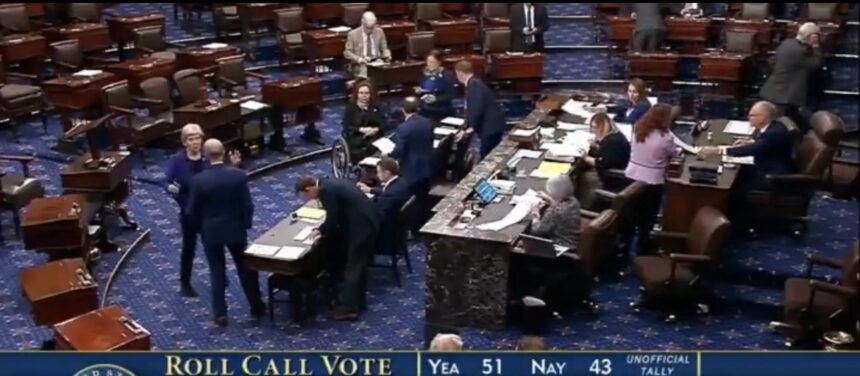
Washington, D.C. — The U.S. Senate voted 51-45 on Tuesday to confirm Kevin Warsh as a member of the Federal Reserve Board of Governors for a 14-year term, advancing President Donald Trump’s nominee one major step closer to becoming the next Chair of the Federal Reserve.0
The mostly party-line vote, which included support from at least two Democrats (Sens. John Fetterman of Pennsylvania and Chris Coons of Delaware in the cloture/advancement stage), clears a key procedural hurdle. A final confirmation vote for the full nomination—including the Chair position—is expected imminently, potentially as early as later this week.2
Warsh, a former Fed governor who served from 2006 to 2011, was nominated by Trump earlier this year to replace Jerome Powell. Powell’s four-year term as Chair expires on May 15, 2026. Powell has indicated he will step down from the leadership role but may remain on the Board of Governors (his governor term runs through January 2028) for an undetermined period.36
Background on Warsh and the Nomination
Warsh previously worked as a special assistant to President George W. Bush on economic policy and has deep experience in financial markets, having also served at Morgan Stanley. Trump selected him after considering several candidates, viewing Warsh as someone who could bring a fresh approach to monetary policy following tensions with Powell over interest rates and inflation management.
During his April 2026 confirmation hearing before the Senate Banking Committee, Warsh pledged to uphold the Fed’s independence, stating he was “no sock puppet” and that monetary policy decisions would remain free from political interference. He also signaled openness to reviewing the Fed’s inflation framework and reducing reliance on unconventional tools like large-scale asset purchases.22
More Read

The Senate Banking Committee advanced his nomination on a 13-11 party-line vote in late April. Earlier procedural delays, including objections from some Republicans tied to an investigation involving Powell and Fed headquarters renovations, had slowed the process, but those appear to have been resolved sufficiently for floor advancement.12
What Comes Next
Once fully confirmed as a Board member, Warsh is widely expected to be elected Chair by the Board. The Chair position carries significant influence over the Federal Open Market Committee (FOMC), which sets the benchmark federal funds rate and shapes broader monetary policy.
Markets will be watching closely for any shifts in tone on interest rates, inflation targeting (currently 2%), and the Fed’s balance sheet. Warsh has a reputation as thoughtful on financial stability while having been critical in the past of certain post-2008 policies.
More Read

Democrats largely opposed the nomination, expressing concerns about potential threats to Fed independence under a Trump administration that has repeatedly criticized Powell and pushed for lower rates. Supporters argue Warsh brings needed accountability and a focus on long-term economic growth.
This confirmation marks a significant victory for the Trump administration in reshaping economic institutions early in the term. Warsh’s leadership could influence everything from borrowing costs for consumers and businesses to the dollar’s value and global financial markets.
The exact timing of any leadership transition and Warsh’s first moves as Chair will likely dominate economic headlines in the coming days.