


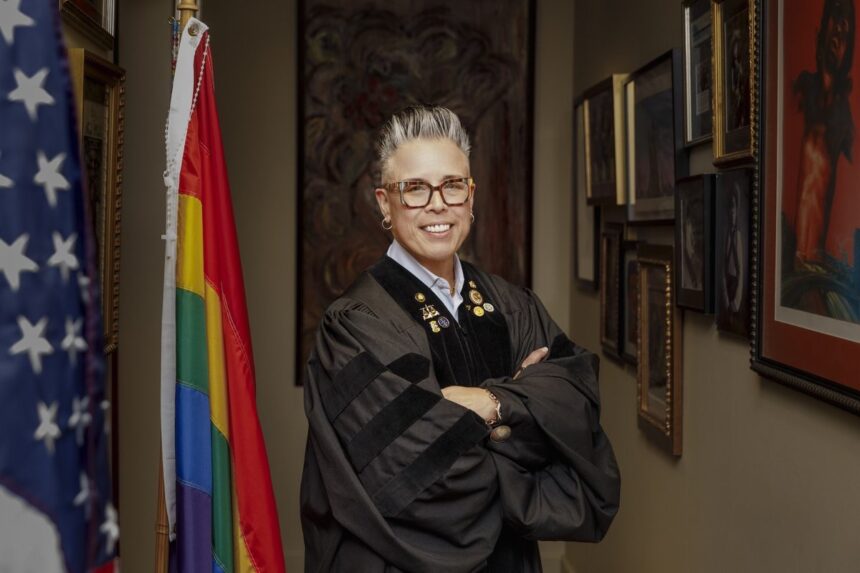
SAN ANTONIO — Rosie Speedlin Gonzalez, the first openly LGBT judge in Texas, has agreed to a lifetime ban from the bench following a high-profile courtroom incident in which she ordered a defense attorney to be handcuffed and detained mid-hearing.
The agreement, signed on Monday, resolves felony charges of unlawful restraint that could have carried up to 20 years in prison. In exchange for the charges being dropped, Gonzalez accepted a permanent prohibition from serving as a judge. She will still be allowed to officiate weddings, provided she does not wear a judicial robe or identify herself as a former judge.
The incident occurred during a hearing when Gonzalez became involved in a heated exchange with the defense attorney over whether the lawyer had coached her client to change his plea. According to reports, the judge ordered the attorney taken into custody and placed in the jury box until she agreed to “conduct herself professionally.”
The case quickly drew national attention due to the unusual nature of a judge ordering an attorney’s arrest inside her own courtroom.
Details of the Courtroom Confrontation
Court records and local reporting indicate that tensions escalated when the judge accused the defense attorney of improper conduct regarding the client’s plea. The attorney was physically restrained and held in the jury box for a period before being released. The episode was described by critics as a serious abuse of judicial power and an overreach that undermined due process.
More Read

Gonzalez’s decision to accept the lifetime ban and the dismissal of criminal charges brings a swift resolution to what could have been a lengthy and contentious legal battle. Legal experts note that such agreements are sometimes reached to avoid the uncertainty and cost of a full trial, especially in high-visibility cases involving sitting judges.
Reactions and Broader Implications
The case has sparked intense debate online and in legal circles. Some commentators viewed the lifetime ban as appropriate accountability for an abuse of authority, while others questioned whether the punishment was influenced by political or cultural factors given Gonzalez’s status as the first openly LGBT judge in Texas.
Supporters of the judge argued that context from the full hearing is missing and that judges must maintain order in their courtrooms. Critics, however, called the incident a “staggering abuse of power” that erodes public trust in the judicial system.
More Read

The San Antonio Express-News, which first reported key details of the resolution, noted that the agreement allows Gonzalez to avoid felony conviction while ensuring she can never again serve in a judicial capacity.
Significance for Judicial Accountability
This case highlights ongoing discussions about judicial conduct, courtroom decorum, and accountability mechanisms for judges. In Texas and across the United States, mechanisms for removing or disciplining judges vary by state, but lifetime bans following formal agreements are relatively rare and signal the seriousness of the allegations.
The incident also adds to broader conversations about the politicization of the judiciary and how personal identity intersects with professional responsibilities. While Gonzalez’s sexual orientation was noted in many reports, the core issue centered on her actions during the hearing rather than her identity.
For the legal community in Texas, the resolution may serve as a reminder of the high standards expected of those who hold judicial power. It also raises questions about how courts handle internal disputes between judges and attorneys when emotions run high during proceedings.
As the story continues to circulate, it has become a flashpoint for discussions on courtroom etiquette, due process, and the balance between a judge’s authority and the rights of legal professionals appearing before them.
For now, the lifetime ban effectively ends Rosie Speedlin Gonzalez’s judicial career. The agreement closes one chapter while leaving many questions about the full context of the courtroom confrontation unanswered in the public eye.