

In a move that signals the next chapter in Tesla’s evolution from electric vehicle pioneer to AI and robotics powerhouse, the company has officially ended production of its flagship Model S sedan and Model X SUV. The decision, announced by CEO Elon Musk during the Q4 2025 earnings call in late January 2026, marks the conclusion of more than a decade of manufacturing these luxury models at the Fremont, California factory. The space once dedicated to high-end EVs is now being rapidly converted into a high-volume production line for Optimus, Tesla’s humanoid robot, which Musk has repeatedly called potentially “the biggest product ever” — not just for Tesla, but in history.
Production of the Model S and Model X wound down through Q2 2026, with the final vehicles rolling off the line in early May 2026. Custom orders ceased earlier, leaving only limited inventory, around 600 units globally by April. Tesla even offered a special Signature Edition run of Plaid variants for select owners as a send-off. This shift isn’t merely about discontinuing low-volume models; it’s a strategic reallocation of resources toward what Tesla views as the future: autonomous robotics and “physical AI.”
The End of an Era for Tesla’s Luxury Icons
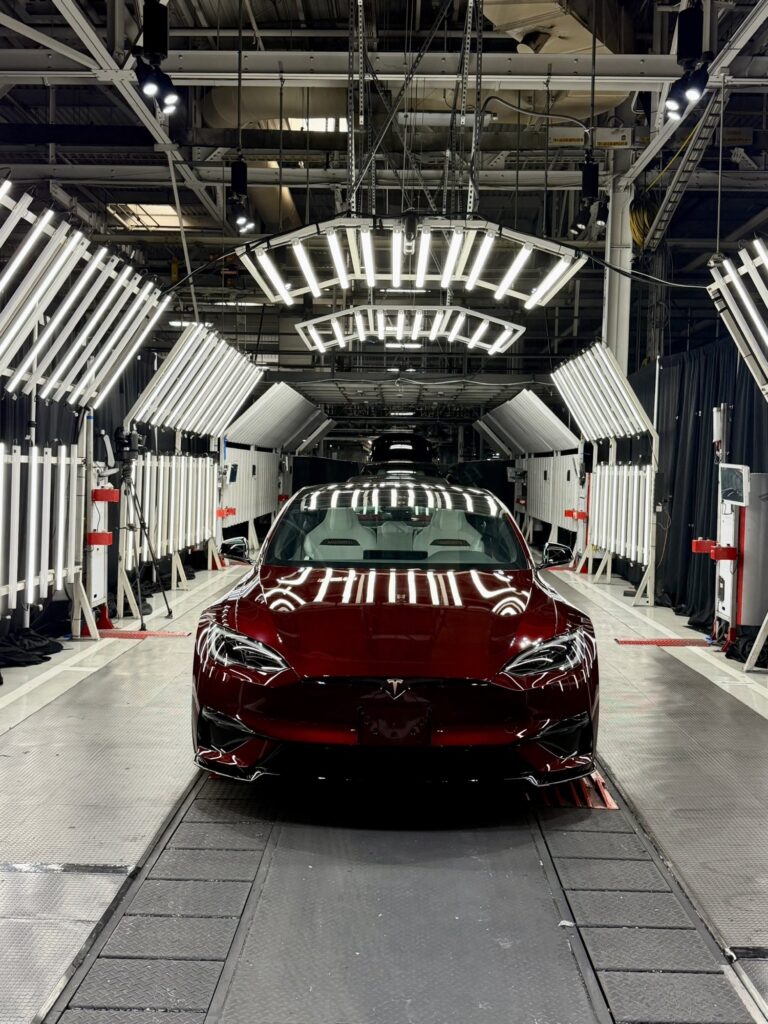
Strategic Shift: Tesla has officially discontinued its pioneering premium electric vehicles, the Model S and Model X, bringing a definitive end to a spectacular 14-year production run. Following CEO Elon Musk’s initial announcement during an earnings call, the company closed the custom design studio configurator for both vehicles. Moving forward, the only factory-new models available to consumers will be strictly pulled from remaining dealership inventory. The decision marks a profound architectural pivot away from traditional, high-upfront-cost luxury sedans toward mass-market scalability, artificial intelligence, and autonomous driving networks.
Source: @woodhaus2 on X / InsideEVs
The Model S, launched in 2012, and the Model X, which followed in 2015, were instrumental in establishing Tesla as a serious automaker. The Model S was the first mass-produced luxury EV from the company, boasting groundbreaking acceleration, over-the-air updates, and a sleek design that challenged traditional luxury sedans from Mercedes, BMW, and Audi. It helped popularize electric vehicles among affluent buyers and set benchmarks for range and performance. The Model X, with its signature falcon-wing doors, extended that appeal to the SUV segment.
At its peak, the Fremont factory a former GM-Toyota joint venture plant that Tesla acquired in 2010 had capacity for up to 100,000 combined S/X units annually, though actual output was often far lower in recent years. In 2023, for example, Fremont produced nearly 560,000 vehicles total, dominated by the high-volume Model 3 and Y. Model S/X sales hovered around 20,000–30,000 units per year by 2025, a tiny fraction of Tesla’s overall output exceeding 1.6 million vehicles. Declining demand for these higher-priced models (often $80,000–$100,000+), coupled with Tesla’s focus on affordability and volume in the 3/Y lines, made the decision pragmatic from a business standpoint.
Musk urged customers interested in S or X models to order promptly during the earnings call, noting production would wind down in the following quarter. The factory will continue producing Model 3 and Y, maintaining Fremont’s role as a core EV hub. However, the dedicated S/X lines representing significant floor space, specialized tooling, and skilled labour are being dismantled with remarkable speed. Tesla executives highlighted the conversion as an “insanely fast” process, potentially completed in just four months, from teardown to new robot assembly lines.
More Read

Why Optimus? Tesla’s Vision for Humanoid Robotics
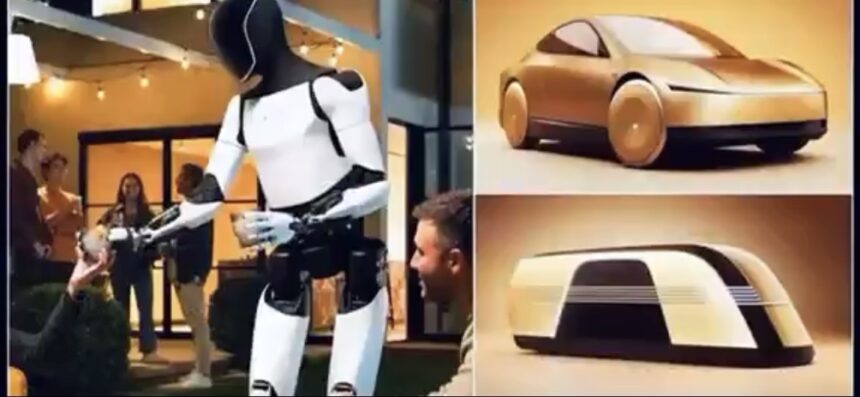
Elon Musk has long positioned Optimus (initially teased as Tesla Bot in 2021) as more transformative than Tesla’s vehicle business. In April 2026 earnings remarks, he reiterated: “Optimus will be our biggest product, not just Tesla’s biggest product, but probably the biggest product ever.” The humanoid robot is designed as a general-purpose, bipedal worker capable of performing tasks in factories, homes, and beyond from assembly line support to household chores.
Current Optimus prototypes, including Gen 2 and early Gen 3 units, are already operating in Tesla facilities. Over 1,000 units are learning tasks by observing human workers, leveraging Tesla’s expertise in AI, computer vision, and end-to-end neural networks honed from Full Self-Driving (FSD) development. The goal is for Optimus to achieve useful autonomy, powered by Tesla’s next-generation AI5 chip, allowing it to operate offline for basic tasks while connecting to advanced AI (like Grok) for complex interactions.
The Fremont conversion targets an initial capacity of 1 million Optimus units per year. Additional lines are underway in Germany, Toronto, and the U.S. Midwest. A larger-scale facility at Giga Texas aims for 10 million units annually by 2027 or later. Musk has suggested pricing under $30,000 per robot, making it accessible for widespread adoption in manufacturing, logistics, elder care, and more. This scale could dwarf Tesla’s automotive output in economic impact, potentially creating a multi-trillion-dollar robotics market.
More Read

Technical and Strategic Implications of the Factory Shift
Converting an automotive assembly line for humanoid robots involves profound engineering challenges. Vehicle production relies on heavy stamping, welding, painting, and final assembly tailored to large metal and composite bodies. Optimus production demands precision electronics, actuator manufacturing, sensor integration, battery systems, and AI hardware calibration more akin to advanced semiconductor or consumer electronics fabs than traditional auto plants.
Tesla is applying lessons from its EV success: modular design, vertical integration, and rapid iteration. The same “gigacasting” and 4680 battery tech innovations that boosted vehicle efficiency are being adapted. For instance, the Cybercab Tesla’s upcoming robotaxi, noted for its record 165 Wh/mi efficiency (half that of the original Model S) , represents parallel progress in autonomy that directly benefits Optimus.
Fremont’s history underscores the ambition. Opened in 1962 as a GM plant and later a NUMMI joint venture with Toyota, it became Tesla’s flagship after a discounted acquisition. It pioneered high-volume EV manufacturing in the U.S., employing over 20,000 people at peaks. The pivot reflects broader industry trends: legacy automakers grapple with slowing EV demand and high costs, while tech-forward companies like Tesla bet on AI-driven disruption. Competitors in robotics (e.g., Boston Dynamics, Figure AI, or Chinese firms like UBTech) are advancing, but Tesla’s data advantage from millions of vehicles and Dojo supercomputing gives it a unique edge.
Market Reaction, Challenges, and Broader Impact
Wall Street and enthusiasts have mixed reactions. Bulls see this as visionary, accelerating Tesla’s valuation toward robotics dominance. Skeptics worry about execution risks humanoid robots remain technically nascent, with concerns over dexterity, safety, reliability, and regulatory hurdles for widespread deployment. Labor implications are significant: while Optimus could address shortages in dangerous or repetitive jobs, it raises questions about workforce displacement.
Environmentally, the shift aligns with Tesla’s sustainability ethos. Humanoids could optimize energy use in factories and enable circular economies. Economically, a successful Optimus rollout might transform global labor markets, boosting productivity in aging societies.
Tesla isn’t abandoning vehicles entirely. Focus remains on Cybertruck, refreshed 3/Y, Semi, and the Cybercab for robotaxi networks. The company continues expanding autonomy software, with FSD advancements feeding directly into robot capabilities. Recent events showcased Cybercab’s efficiency and self-driving prowess, reinforcing the “transportation as a service” vision.
More Read

Looking Ahead: A Robotics Revolution?
As of mid-2026, Optimus Gen 3 unveiling is anticipated soon, with volume production ramping in Fremont by late 2026. Tesla’s pace dismantling car lines and installing robot infrastructure in months demonstrates the agility that defined its EV rise.
This transition from Model S/X to Optimus encapsulates Tesla’s ethos: constant innovation, betting big on future technologies, and willingness to sunset successful products for greater opportunities. The cars that launched the EV revolution are making way for machines that could redefine human labor and society.
Whether Optimus fulfills Musk’s “biggest product ever” prophecy remains to be seen. History shows Tesla often delivers on ambitious timelines others deem impossible. Fremont’s transformation from car factory to robot foundry could be the most visible symbol yet of the AI-physical world convergence. For Tesla owners, investors, and the tech world, it’s a reminder that the company’s journey was never just about cars it was always about accelerating humanity’s progress into an electrified, autonomous, and now humanoid future.