

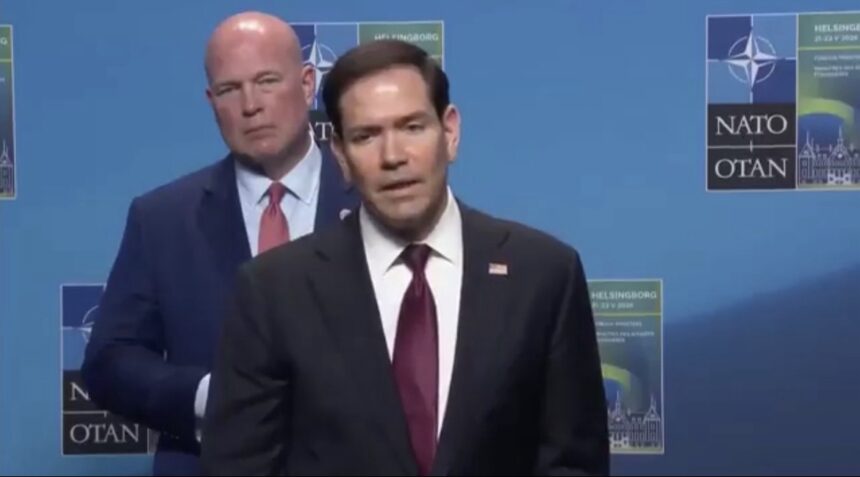
Washington has paused its role as mediator in peace negotiations between Ukraine and Russia after more than a year of efforts failed to produce concrete results, according to US Secretary of State Marco Rubio.
Rubio made the announcement during a recent press event. He emphasized that the United States had been the only party both sides initially accepted as a facilitator. “We were the only ones both Russians and Ukrainians were willing to talk to. So we got involved. Unfortunately, it did not yield results. That is the point,” Rubio stated.
He added that Washington would only return to the negotiations if the situation changes. Rubio openly invited other parties to assume the mediator role. “If someone else wants to take this on – please, be my guest,” he said.
Background on the Ongoing Conflict
This development marks a significant shift in the Trump administration’s approach to the conflict, which began with Russia’s full-scale invasion of Ukraine in February 2022. Over the past four years, the war has resulted in hundreds of thousands of casualties, widespread destruction across Ukrainian cities and infrastructure, and massive economic losses for both nations as well as global ripple effects on energy and food prices.
More Read

The fighting has seen Russian forces make incremental gains in eastern Ukraine, particularly in the Donbas region, while Ukrainian forces have conducted effective defensive operations and long-range strikes. Despite periods of intense combat, the front lines have largely stabilized into a grinding war of attrition.
Trump Administration’s Diplomatic Initiatives
President Donald Trump’s team entered office in January 2025 with a clear pledge to end the war quickly through diplomacy. Trump had repeatedly criticized previous US policy under the Biden administration, arguing that unlimited aid without a clear path to resolution only prolonged the stalemate. Early in his term, the administration engaged both sides aggressively, organizing talks in locations including Geneva, Miami, and other European capitals.
More Read
In late 2025, US and Ukrainian officials met in Geneva to discuss a US-backed peace framework. Secretary Rubio described those sessions as highly productive, noting “tremendous progress” on key issues. The talks produced an updated version of Trump’s initial 28-point proposal, which addressed security guarantees, territorial questions, and long-term economic arrangements for Ukraine. Ukrainian President Volodymyr Zelenskyy expressed gratitude for the American efforts at the time.
Further rounds followed in early 2026. US envoys, including Special Envoy Steve Witkoff and Jared Kushner, facilitated indirect discussions between Russian and Ukrainian delegations in Geneva. These meetings narrowed the agenda to core disputes, particularly territorial control in the Donetsk and Luhansk regions. Russia has demanded full control over the remaining parts of Donbas under Ukrainian administration, while Kyiv has insisted on preserving its territorial integrity and receiving robust security assurances, potentially involving neutral status or alternative guarantees short of full NATO membership.
Challenges and Sticking Points in Negotiations
Rubio himself highlighted the Donetsk issue as particularly challenging. In January 2026 testimony, he described it as “a very difficult” gap that negotiators were actively trying to bridge. Despite some narrowing of differences, fundamental disagreements persisted on issues such as demilitarization, reparations, and the status of occupied territories in Crimea and southern Ukraine.
By April 2025, signs of impatience emerged. Rubio warned that the United States would “move on” from mediation efforts without rapid progress, giving the parties only days to show serious commitment. Trump echoed this stance, pressuring Ukraine to engage constructively while criticizing what he saw as insufficient appreciation for American involvement.
Efforts continued into 2026, but momentum stalled. By early May, Rubio acknowledged during a visit to Italy that the process had reached a “dead end” or “stagnated.” “We tried to play the role of mediator, but so far it has not produced fruitful results for a number of reasons,” he explained. The United States remains prepared to re-engage if conditions improve and a productive outcome seems possible, but it will not invest further time and resources in a non-moving process.
More Read

Ongoing Battlefield and Humanitarian Realities
The pause comes amid ongoing battlefield realities. Russian forces continue incremental advances in eastern Ukraine, while Ukrainian drone strikes and defensive operations inflict costs on Russian advances. Both economies suffer: Ukraine faces reconstruction costs estimated in the hundreds of billions of dollars, and Russia contends with sanctions, manpower shortages, and isolation from Western markets. Civilian impacts remain severe, with regular reports of infrastructure damage, displacement, and humanitarian challenges.
Millions of Ukrainians remain displaced, both internally and across Europe. Energy infrastructure has been repeatedly targeted, leading to power outages during harsh winters. Agricultural production, once a cornerstone of Ukraine’s economy and global food supply, continues to face disruptions from mined fields and Black Sea export challenges.
International Reactions and Broader Implications
International reactions to the US decision vary. European allies, who have provided substantial aid to Ukraine, express concern about a potential vacuum in diplomacy. Some NATO members worry that reduced US engagement could embolden Russia or force Europe to shoulder greater burdens. Ukrainian officials have stressed the need for continued support and a just peace that respects sovereignty. Russian responses, as expected, frame the development as recognition of the limits of external pressure.
Analysts point to several factors behind the impasse. Deep mutual distrust between Moscow and Kyiv complicates any compromise. Russia views the conflict as existential, tied to security concerns about NATO expansion, while Ukraine sees it as a fight for survival and national identity. Territorial concessions remain politically toxic in Ukraine, where public opinion strongly opposes ceding land. On the Russian side, President Vladimir Putin has shown little flexibility on maximalist demands.
Economic Costs and Global Effects
Economically, a prolonged war continues to strain global markets. Energy prices fluctuate with battlefield developments, and agricultural exports from the Black Sea region remain disrupted. Reconstruction in Ukraine would require massive international investment, potentially involving private sector participation and security-backed guarantees that have proven elusive. For more analysis on these developments, visit US foreign policy updates.
Domestically in the United States, the decision aligns with Trump’s long-stated goal of reducing entanglement in “endless” foreign conflicts. It allows focus on other priorities such as economic competition with China, border security, and domestic prosperity. Critics, however, argue that stepping back could undermine US credibility as a global leader and encourage authoritarian aggression elsewhere.
Looking Ahead: Potential Paths Forward
Looking ahead, the US shift opens the door for other potential mediators, such as China, Turkey, or multilateral bodies like the United Nations. However, neither side has signaled strong interest in alternatives thus far. The conflict’s continuation risks further escalation, including possible involvement of broader regional actors or increased hybrid threats.
Rubio’s remarks underscore a pragmatic assessment. The United States facilitated talks because both parties accepted it as an honest broker at the outset. When progress halted, continuing without results served no one’s interests. Washington stands ready to return if dynamics shift, perhaps through battlefield changes, leadership adjustments, or new proposals that bridge remaining gaps.
For now, the burden of finding a path forward rests more directly on Russia and Ukraine. The human and financial toll of the war grows daily, making the need for resolution urgent. Whether other actors can fill the mediation void or if direct bilateral talks can advance remains uncertain. The coming months will test whether the pause leads to renewed momentum or simply a recognition of entrenched positions.
This development reflects the complexities of modern great-power diplomacy. Even with the full weight of the world’s leading nation behind mediation, ending a conflict rooted in deep historical, security, and identity issues requires genuine buy-in from the warring parties. As Rubio noted, the United States will not force an agreement but stands prepared to assist if opportunity arises.