


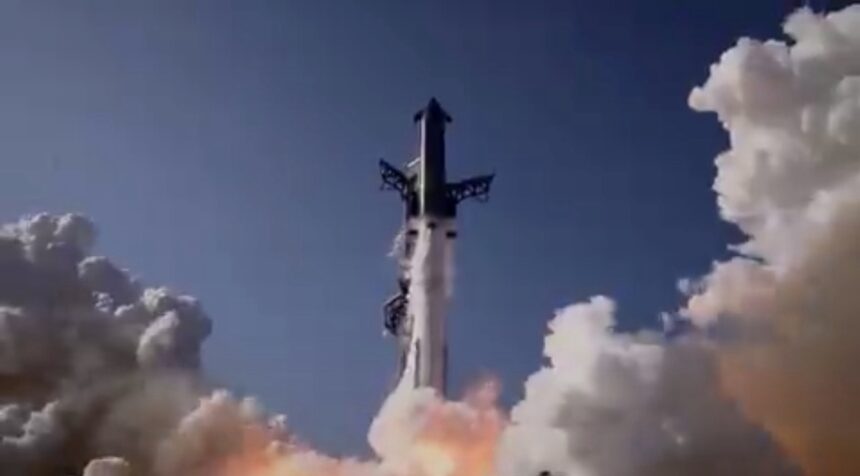
SpaceX is about to make Wall Street history. According to Reuters, the rocket company backed by Elon Musk plans to price its initial public offering at a fixed $135 per share. By selling around 555.6 million shares, it aims to raise a record-breaking $75 billion. That would value the entire company at about $1.75 trillion when it debuts on the Nasdaq.
This is not your average tech IPO. The move to lock in the price so early stands out. Most companies start with a range and fine-tune it right before trading begins. SpaceX is jumping straight to a firm number ahead of its investor roadshow, which kicks off Thursday. The boldness reflects the enormous confidence the company and its backers have in the demand for shares.
For context, SpaceX has grown from a scrappy startup with big dreams into one of the most valuable private companies on the planet. Founded in 2002, it has revolutionized space travel. Reusable rockets like Falcon 9 cut launch costs dramatically. Starlink now beams high-speed internet to millions of customers worldwide, from remote villages to moving ships and planes. The company also handles a huge chunk of NASA missions and commercial satellite deployments.
Recent financials show strong momentum mixed with heavy investment. Starlink drove significant revenue growth last year, but losses piled up from ambitious projects like the next-generation Starship rocket and new artificial intelligence infrastructure. Still, investors seem ready to bet on the long game. A $1.75 trillion valuation would place SpaceX among the most expensive public companies overnight, rivaling or surpassing some of the biggest names in tech.10
Why This IPO Looks Different
Several details make this offering unique. Elon Musk, who controls the vast majority of voting power, has agreed to a 366-day lockup period. That means he will not sell any shares for roughly a year after the IPO. It sends a clear message: the founder is in it for the long haul and is not looking for a quick exit. Other major investors also face one-year restrictions, though some flexibility exists for employees and select insiders.
More Read

SpaceX is also trying to open the door wider for everyday investors. Reports suggest up to 30 percent of the offering could go to individual retail buyers. That is higher than many traditional IPOs, which often favor big institutions. If it happens, it could let more people own a piece of the company that literally launches humans and satellites into orbit. Of course, getting allocated shares in hot IPOs can be tough for regular folks, but the intent appears customer-friendly.
The proceeds from the share sale will fuel two big priorities: expanding AI computing power and growing the Starlink satellite network. SpaceX has already poured resources into data centers and chips to support advanced AI work. Starlink continues to add satellites and ground stations to improve coverage and speeds. These investments position the company at the intersection of space, communications, and artificial intelligence.2
The Road to Public Markets
SpaceX stayed private far longer than most Silicon Valley darlings. Musk repeatedly said he wanted to focus on building without quarterly earnings pressure. But as the company matured, demands for liquidity from employees and early investors grew. Secondary share sales gave some relief over the years, but nothing on the scale of a full IPO.
More Read

The timing feels right in many ways. Starlink has hit key milestones with subscriber growth and new contracts. Reusable launch technology is proven. Starship test flights continue to push boundaries toward Mars ambitions. At the same time, the broader market has shown appetite for big space and tech stories. Tesla’s journey as a public company gave Musk plenty of experience navigating investor expectations, even if it came with plenty of volatility.
Still, challenges remain. Launch cadence must stay high to keep costs down and revenue flowing. Regulatory hurdles for Starlink spectrum and international operations can pop up anywhere. Competition in space is heating up, with players like Amazon’s Project Kuiper and others chasing similar satellite broadband goals. On the AI side, building competitive infrastructure requires massive capital and talent.
A $1.75 trillion valuation also invites scrutiny. Some analysts argue the number already prices in years of optimistic growth. Starlink needs to keep scaling users and ARPU (average revenue per user). Starship needs to reach full reusability and high flight rates to unlock cheaper access to space. Any delays could test investor patience once the stock starts trading under the ticker SPCX, expected around June 12.
What It Means for Investors and the Industry
If successful, this IPO could reshape how the public thinks about space companies. For decades, space was mostly government territory. SpaceX proved a private firm could lead. Going public lets everyday investors participate in that story. It also sets a high bar for future space IPOs.
Index providers have reportedly adjusted rules to allow faster inclusion of big new listings like this one. That could mean automatic buying from passive funds, adding more fuel to potential opening-day pops. Critics worry it creates risks if the stock later corrects, but supporters see it as recognition of SpaceX’s real economic importance.
Musk’s personal stake will remain enormous. Even after the offering, he will control the company direction. His track record with Tesla shows both the upside of bold vision and the downside of execution hiccups and market swings. Shareholders will need strong stomachs.
More Read

For the broader tech sector, a successful mega-IPO could boost confidence. It signals that investors still reward ambitious, capital-intensive innovation even in a world of high interest rates and economic uncertainty. AI and space are two of the hottest themes right now, and SpaceX sits right at their overlap.
Looking Ahead
The roadshow starting this week will give investors a closer look at the numbers and strategy. Expect plenty of questions about timelines for profitability, Mars plans, and how AI efforts tie into the core space business. Management will need to balance excitement with realistic guidance.
No one doubts SpaceX has changed the game. From landing rockets on drone ships to lighting up the night sky with Starlink trains, the company delivers moments that capture public imagination. Turning that into sustained shareholder value is the next test.
At $135 per share and a nearly two-trillion-dollar valuation, the bar is set incredibly high. But if any company can reach for the stars, literally and figuratively, it is this one. The coming weeks will show whether Wall Street agrees.
This IPO is more than a fundraising event. It marks the moment one of the most influential private companies of our era steps into the public spotlight. For space enthusiasts, tech watchers, and investors alike, it is a launch worth following closely. The countdown has begun.