

In the high mountains of Lesotho, where traditional internet infrastructure has long struggled against steep terrain and isolation, SpaceX’s Starlink is now making a tangible difference for public safety. Over 25 sites including police stations, traffic management systems, and disaster response teams have gone live with reliable satellite connectivity. This rollout, spotlighted in recent updates from Starlink and Elon Musk, represents more than just another market expansion. It shows how quickly satellite technology can transform emergency services in challenging environments when regulators act decisively.
Lesotho, often called the Kingdom in the Sky, is a small, landlocked nation entirely surrounded by South Africa. Its dramatic landscapes feature rugged highlands, deep valleys, and elevations that make conventional fiber optic or terrestrial broadband deployment difficult and costly. Floods, landslides, and other natural hazards frequently disrupt whatever ground based networks exist. In these conditions, Starlink’s low Earth orbit constellation offers a practical solution: direct to user terminals that require only a clear view of the sky and a power source. No extensive cabling, no tower construction in inaccessible areas, just fast, resilient internet delivered from space.
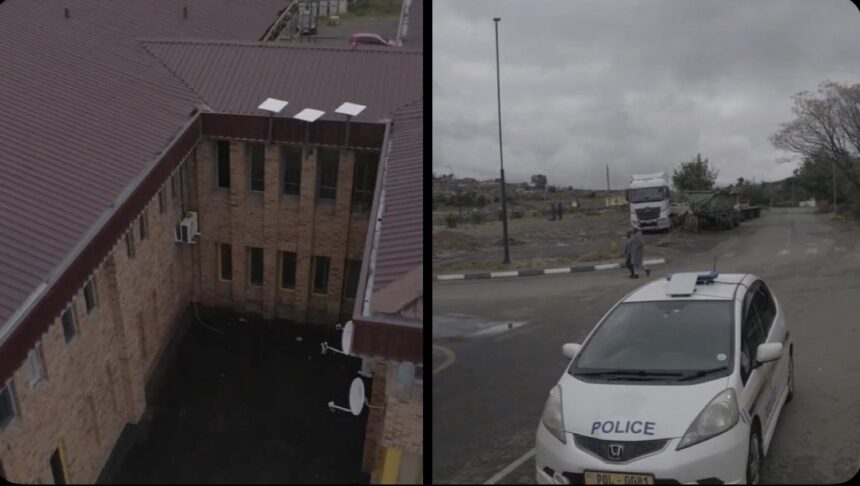
The deployment focuses squarely on critical services. Police outposts in remote districts now have dependable links for coordination and reporting. Traffic systems benefit from improved real time monitoring. Disaster management units gain the ability to maintain communications even when local infrastructure fails. Photos circulating from the rollout show Starlink dishes mounted on buildings and even vehicles, underscoring the mobility and flexibility of the system in a country where first responders must often operate far from urban centers.
This progress stems from forward thinking policy. In April 2025, the Lesotho Communications Authority granted Starlink a full 10 year operational license after updating regulations to accommodate satellite based services. Starlink Lesotho (Pty) Ltd had applied earlier, prompting the authority to revise its framework for low Earth orbit technology. Rather than endless consultations or pilots, Lesotho moved to implementation. By June 2026, the service was actively supporting public safety networks across the nation.
Navigating Geography and Governance
Lesotho’s geography demands innovative approaches. Much of the population lives in scattered highland communities where laying cables would be prohibitively expensive and vulnerable to damage. Starlink sidesteps these issues entirely. Terminals can be installed quickly on rooftops or mobile units, providing speeds and reliability that traditional providers have found elusive in such terrain.
More Read

The partnership extends beyond basic access. Local operators like T Connect have helped integrate Starlink into the Lesotho Mounted Police Service, connecting headquarters, stations, and remote outposts. This level of integration means officers can access databases, share video or location data, and coordinate responses without the frustrating delays common in areas with spotty cellular coverage. In disaster scenarios common in Lesotho due to its climate and topography, such connectivity becomes a literal lifeline, enabling faster alerts, resource allocation, and rescue operations.
Comparisons with neighboring South Africa are inevitable and revealing. Despite Starlink’s technical readiness and interest from various sectors, the larger economy remains without official service. The main obstacle continues to be Broad Based Black Economic Empowerment (B BBEE) requirements under the Electronic Communications Act. These rules generally mandate at least 30 percent equity ownership by historically disadvantaged groups for telecom licenses. Starlink has cited these conditions as a barrier, while South African officials maintain that compliance is necessary and that the company has not fully pursued the appropriate licensing path.
Debates around these policies are heated. Proponents argue they address historical inequalities in a post apartheid society. Critics, including Musk, contend that rigid equity rules can deter foreign investment in strategic technologies. Whatever the merits, the practical outcome is clear: while Lesotho has connected emergency services, South Africa continues regulatory discussions. Musk has publicly noted the contrast, pointing out that politics appears to be buffering progress in one market while Starlink advances in another.
Broader Impact on African Connectivity and Public Safety
Starlink’s African expansion has already reached multiple countries, but the Lesotho case stands out for its focused application to public safety. Globally, the service has proven its value in emergencies from providing connectivity after hurricanes in the Caribbean to supporting relief efforts in conflict zones. In Lesotho, the emphasis on police and disaster teams suggests a strategic choice: prioritize resilience where it matters most for citizen safety and governance.
The technology itself relies on thousands of satellites in low orbit, delivering lower latency than older geostationary systems. Users report speeds suitable for video calls, data transmission, and command and control applications. For emergency services, this means officers can stream live footage from incidents, access cloud based mapping, or maintain contact with central command from vehicles equipped with mobile terminals. In highlands prone to sudden weather changes, that reliability can reduce response times from hours to minutes.
Economically, better connectivity in remote areas opens doors beyond safety. Education, healthcare, and small businesses stand to benefit as more terminals spread. Lesotho’s 10 year license provides stability for long term investment, encouraging further rollout. Other nations watching this model may see value in balancing local empowerment goals with the need for rapid digital infrastructure.
Of course, satellite internet is not without challenges. Terminals require upfront costs and clear skies, and service depends on SpaceX’s ongoing satellite maintenance and launches. Regulatory approval remains key; countries that treat Starlink as core infrastructure rather than a luxury service tend to see faster adoption. Lesotho’s approach licensing quickly and deploying for essential services offers a blueprint for others facing similar geographic hurdles.
Looking Ahead: Technology Outpacing Regulation?
As of July 2026, Starlink continues expanding across approved African markets. In Lesotho, the focus on over 25 public safety sites marks an early but meaningful milestone. It demonstrates that when a government prioritizes outcomes safer streets, quicker disaster response, connected remote communities satellite broadband can deliver results in months rather than decades.
South Africa’s situation remains fluid. Discussions around policy adjustments, including potential shifts in how B BBEE applies to new technologies, continue. Industry observers suggest a launch could still happen later in 2026 or 2027 if hurdles are cleared, but momentum has clearly shifted to early adopters like Lesotho.

For Africa as a whole, this episode highlights a recurring theme in tech adoption. Geography and legacy infrastructure gaps create opportunities for disruptive solutions like Starlink. Yet governance decisions ultimately determine who benefits first. Lesotho chose action. Its police, traffic controllers, and disaster responders are already operating with stronger connections as a result.
The contrast is instructive. In remote rooftops and highland stations, Starlink is proving its worth not through hype but through practical, life impacting deployment. As more countries evaluate satellite options, the Lesotho story will likely be cited as evidence that timely licensing and targeted rollout can bridge digital divides faster than prolonged regulatory debates. South Africa, surrounded by this progress on its borders, faces growing pressure to resolve its own path forward.
This development arrives at a time when global demand for resilient communications is rising. Climate events, security challenges, and the push for inclusive growth all require robust networks. Starlink is ready where permitted. The question for policymakers across the region is whether regulation will enable or continue to buffer that readiness. Lesotho’s emergency services, now better linked than ever, provide a compelling case study in favor of the former.