

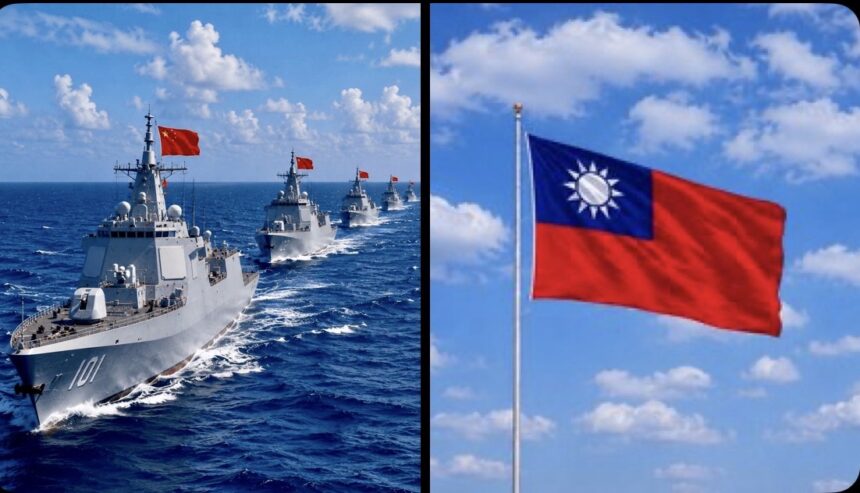
Taiwan has raised alarms over a significant deployment of Chinese vessels in waters surrounding the island, with officials stating that more than 100 ships from the People’s Liberation Army Navy, coast guard, and related maritime forces have been active in the region. The development, reported on May 23, 2026, comes shortly after high-level diplomatic engagements between the United States and China, adding to longstanding concerns about stability in the Taiwan Strait.
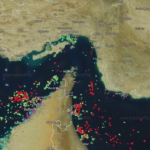
Joseph Wu, secretary-general of Taiwan’s National Security Council, highlighted the scale of the activity in public statements and shared maps showing concentrations of vessels along the First Island Chain. These waters stretch from areas near Japan in the north to the South China Sea in the south. While initial reports described incursions into territorial waters, clarifications indicate the vessels are operating across broader regional zones rather than a mass breach of Taiwan’s immediate 12-nautical-mile boundary. Taiwanese defense sources continue to monitor the situation closely.
This latest episode fits into a pattern of intensified Chinese gray-zone operations. For years, Beijing has employed coast guard ships, fishing militias, and naval assets to assert claims over Taiwan and surrounding areas without crossing into full-scale conflict. Incursions near outlying islands such as Kinmen and Pratas have become routine, with monthly averages of several vessels entering restricted zones. These tactics aim to normalize presence, test responses, and gradually erode Taiwan’s control.
Context of the Deployment
The timing of this surge aligns with recent diplomatic moves. It follows a summit between U.S. President Donald Trump and Chinese President Xi Jinping in Beijing. Discussions there covered trade, technology, and Taiwan, among other issues. Trump has described arms sales to Taiwan as a potential negotiating tool, while Beijing has pushed back firmly against any moves perceived as supporting Taiwanese independence.47
For more on the diplomatic backdrop, see China Delays Pentagon Official’s Beijing Visit Amid Standoff Over $14 Billion Taiwan Arms Package on Briefly USA.
More Read

Taiwan’s Ministry of National Defense routinely tracks Chinese aircraft and vessels. Daily averages often include dozens of aircraft entering the air defense identification zone and several ships. However, a concentration exceeding 100 vessels stands out as notable, echoing larger drills conducted in late 2025. Those exercises involved coordinated formations and simulated blockade scenarios.
Analysts view these operations as part of a “three seas forces” strategy that integrates navy, coast guard, and maritime militia. Civilian and paramilitary vessels often form the forward layer, creating friction while military assets provide backup. This approach allows China to project power while maintaining plausible deniability for escalation.
Broader Regional Implications
The activity extends beyond Taiwan. Vessels have appeared near the Philippines and along key sea lanes. This raises concerns among U.S. allies in the Indo-Pacific. Japan, Australia, and the Philippines have strengthened cooperation through alliances like the Quad. Freedom of navigation operations by the U.S. Navy in the Taiwan Strait serve as regular reminders of international stakes in open waterways.
More Read

Taiwan, a global leader in semiconductor manufacturing, remains economically vital. Any disruption could ripple through world supply chains. The island’s defense strategy emphasizes asymmetric capabilities, such as mobile missile systems and drones, to deter a potential amphibious assault. Recent reports also note China modifying commercial ferries for possible military use in large-scale operations.
For insights into U.S. policy considerations, read Trump’s Planned Call to Taiwan’s President Sparks Sharp Chinese Backlash Amid $14 Billion Arms Deal Deliberations on Briefly USA.
Taiwan has responded by dispatching its own coast guard and naval assets to monitor and document movements. President Lai Ching-te has reiterated commitments to defend democratic self-rule while calling for international support. The island maintains strong unofficial ties with the United States under the Taiwan Relations Act, which obligates Washington to provide defensive arms.
Historical Patterns and Escalation Risks
Tensions in the Taiwan Strait trace back decades. China views Taiwan as a breakaway province and has never renounced the use of force to achieve unification. Taiwan, officially the Republic of China, operates as a vibrant democracy with its own government, military, and currency. Most countries, including the United States, adhere to a One China policy while maintaining robust economic and security partnerships with Taipei.
Previous peaks in activity occurred around sensitive political events, such as Taiwanese elections or high-profile visits by foreign officials. In 2022 and 2025, large-scale military drills followed such triggers. The current episode, while significant, has not yet involved live-fire exercises or direct approaches into prohibited waters on the scale of those events.
Experts caution that repeated gray-zone actions can desensitize defenders and create opportunities for miscalculation. At the same time, economic interdependence and the catastrophic costs of war serve as deterrents. China’s own domestic challenges, including growth pressures, may influence its appetite for risk.
More Read

Related coverage on Briefly USA includes discussions of Canadian parliamentary visits to Taiwan and broader great-power dynamics. See Canadian MP Michael Chong Defies Beijing in Taiwan Visit, Asserting Sovereignty Amid Strained Relations.
International Reactions and Outlook
The United States has not issued an immediate detailed response to the latest vessel movements but continues routine patrols and intelligence sharing with Taiwan. Congressional leaders from both parties have long supported stronger defensive ties. Bipartisan legislation has advanced arms packages aimed at bolstering Taiwan’s resilience.
Regional partners express quiet concern. Southeast Asian nations with South China Sea disputes watch closely, as do Northeast Asian allies. Global markets, particularly technology stocks, remain sensitive to any signs of escalation that could affect Taiwan’s chip production.
As of May 23, 2026, the situation remains fluid. Taiwanese authorities urge calm while maintaining vigilance. Beijing has not publicly commented on the specific numbers but routinely describes its activities as legitimate training and law enforcement in its sovereign waters.
This episode underscores the persistent fragility of cross-strait relations. While direct conflict appears unlikely in the near term, sustained pressure through maritime presence tests resolve on all sides. Diplomatic channels, including potential U.S.-China military dialogues, will play a key role in managing risks. For ongoing developments, Briefly USA continues to track related stories on arms policy, regional visits, and geopolitical strategy.