

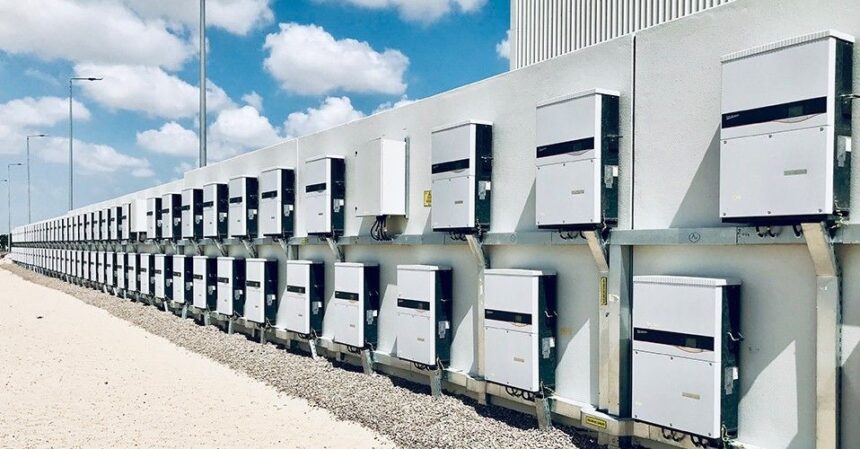
WASHINGTON — The Trump administration is developing new regulations to restrict imports of foreign-made inverters, the critical devices that connect solar panels and battery storage systems to the electrical grid, citing serious national security risks tied to China.
The proposed rule, being drafted by the Federal Communications Commission (FCC), would target new foreign inverter models and could be finalized as early as later this year. Officials are primarily concerned that inverters manufactured in China could be exploited to disrupt or remotely control power supplies across the United States.1
What Are Inverters and Why the Concern?
Inverters serve as the essential “bridge” between renewable energy sources and the grid. They convert the direct current (DC) produced by solar panels or stored in batteries into alternating current (AC) that homes, businesses, and the broader power network can use.
U.S. experts who examined Chinese inverters in recent years reportedly discovered unauthorized communication hardware not listed in the manufacturers’ documentation. This finding has heightened fears that these devices could function as potential backdoors, allowing external actors to interfere with grid operations.
China dominates global inverter production, led by major players such as Sungrow and Huawei. These companies gained significant market share in the U.S. and Europe by offering lower prices than domestic alternatives, resulting in widespread installation of these systems in solar farms and battery storage projects.
More Read

Policy Shift Driven by Broader Security Priorities
The current drafting effort revives an initiative from last summer that had stalled amid a period of U.S.-China engagement. Momentum returned after the European Commission banned Chinese-made inverters from publicly funded energy projects in May 2026 over similar cybersecurity concerns.
This move aligns with other recent U.S. actions restricting Chinese technology in critical infrastructure, including FCC bans on certain foreign drones and routers, as well as existing Department of Defense procurement restrictions on Chinese solar components under the fiscal year 2026 National Defense Authorization Act.
Energy security analysts describe the situation as a wake-up call. “Europe and America are waking up to the risk of losing sovereign control over their power systems through inverters,” said Uri Sadot, CEO of SolarDefend, highlighting how reliance on low-cost foreign hardware has created hidden vulnerabilities.
More Read

Potential Impacts on Renewable Energy and Supply Chains
If implemented, the restrictions would push utilities and developers toward non-Chinese suppliers, accelerating efforts to build domestic manufacturing capacity. While this could strengthen long-term grid resilience and reduce geopolitical risks, it may also raise short-term costs for solar and battery projects during an ongoing push for clean energy expansion.
Chinese officials have pushed back against the proposal, arguing it represents an overreach of national security concepts and unfairly targets their companies. They have called for a fair and non-discriminatory environment for international business.
The development reflects a broader recalibration in Washington, where clean energy goals are increasingly weighed against supply chain security and protection of critical infrastructure from foreign adversaries.
As the FCC continues work on the draft rule, industry stakeholders, lawmakers, and national security experts are expected to weigh in heavily in the coming months. The outcome could reshape how the United States sources the technology powering its renewable energy future.