


Rep. Nancy Mace’s measures advance in FY2027 defense bill with bipartisan support on the House floor.
Washington, D.C. — The U.S. House of Representatives has passed two key amendments to the National Defense Authorization Act (NDAA) for Fiscal Year 2027, sponsored by Rep. Nancy Mace (R-SC). The amendments prohibit taxpayer-funded transgender medical procedures under the military’s TRICARE health program and protect biological sex-based spaces for women and girls in Department of Defense facilities.
What the Amendments Do
One amendment prohibits the Department of Defense from covering or furnishing certain gender-related medical treatments under TRICARE. This includes surgeries, puberty blockers, and hormone therapies intended for gender transition, with limited exceptions for specific medical conditions such as disorders of sex development.
A second amendment focuses on protecting women and girls by restricting access to single-sex spaces and facilities on military installations or in Department of Defense Education Activity (DoDEA) schools based on biological sex. This supports fairness in areas such as sports, bathrooms, and changing facilities.
More Read

These measures reflect efforts to prioritize military readiness and biological reality in defense policy.
House Floor Action
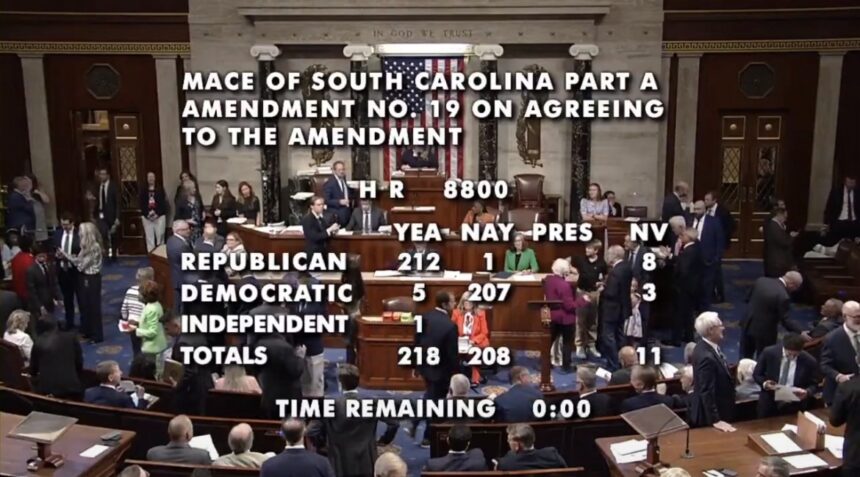
Video footage from the House floor shows the vote tally updating in real time on one of the amendments (Amendment No. 19, Part A). It passed with a recorded vote of approximately 219-208, drawing support from nearly all Republicans and a small number of Democrats.
More Read

Rep. Mace stated following the votes: “Both of my NDAA amendments targeting mentally ill transgenders and protecting our women and girls passed the floor of the U.S. House of Representatives tonight with flying colors!”
Broader Context in the NDAA Debate
The NDAA is an annual must-pass bill authorizing defense spending, pay raises for service members, and policy changes across the Department of Defense. These amendments were adopted during floor consideration of H.R. 8800.
A separate amendment attempting to codify a broader ban on transgender individuals serving in the military according to their gender identity did not pass.
The House version of the FY2027 NDAA will now proceed to the Senate for consideration, where further amendments and negotiations are expected.
Reactions
More Read

Supporters praised the amendments as restoring focus on combat effectiveness and taxpayer priorities. Critics argued the changes limit access to care and discriminate against transgender service members and their families.
The votes highlight the ongoing national debate over transgender policies in government institutions, sports, and healthcare, especially in taxpayer-funded programs.
Next Steps
With the amendments incorporated into the House-passed NDAA, attention shifts to the Senate. Final enactment would require reconciliation of House and Senate versions and presidential approval.
Key Takeaways
- Two Mace-sponsored amendments passed the House.
- One targets TRICARE coverage of transgender medical procedures.
- The other protects single-sex facilities and spaces for women and girls in DoD settings.
- Votes passed with strong Republican support and limited Democratic crossover.
This development continues congressional efforts to shape military policy on gender-related issues.