

Iran’s Islamic Revolutionary Guard Corps Navy declared the Strait of Hormuz closed to maritime traffic on June 20 2026. Officials cited violations of a recent United States Iran memorandum of understanding by both Washington and Israel particularly over continued fighting involving Hezbollah in Lebanon. This marks another cycle in the on again off again restrictions on the vital waterway that carries roughly one fifth of global oil trade.
The announcement came through state media and IRGC channels. It warned vessels not to approach the strait and tied the move directly to Israeli military actions in southern Lebanon that reportedly killed dozens in recent hours. Iranian leaders framed the decision as a response to broken commitments in the fragile truce mediated in recent days. The MOU signed just earlier this week had aimed to ease hostilities that erupted earlier in 2026 and to restore some flow through the strait under monitored conditions.
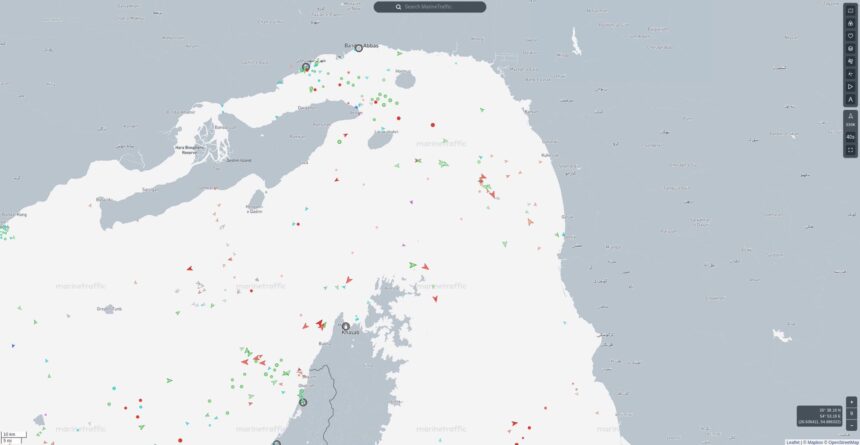
This is not the first such declaration. Iran has used the strait as leverage multiple times since March when initial closures and selective blockades began amid direct exchanges with US and Israeli forces. Traffic had dropped sharply in earlier phases with many tankers rerouting or waiting offshore. Yet even during declared closures some vessels continued moving often under US guided protections or through alternative paths. Real time maritime data from services like MarineTraffic has shown limited but ongoing activity in recent weeks including a modest uptick after the latest interim agreement.
US Central Command has pushed back against the Iranian claim. Officials maintain that commercial shipping persists and that Iran lacks the ability to enforce a total shutdown. Independent trackers report a handful of transits today with some vessels still positioned near the traffic separation schemes. Outbound counts have fluctuated but have not hit absolute zero in the immediate hours following the statement. This pattern echoes past episodes where rhetoric outpaced operational reality.
The stakes remain high. The strait serves as the primary export route for oil from Saudi Arabia Iraq and other Gulf producers as well as a key import path for refined products into the region. Any sustained disruption could spike global energy prices at a time when markets already watch Middle East developments closely. Insurance rates for vessels in the area would likely climb further and shipping companies might opt for longer routes around Africa adding days and costs to voyages.
Yet analysts urge caution in assessing immediate impact. Past Iranian closures have proven partial and difficult to maintain against international naval presence. The US has demonstrated willingness to escort traffic and to challenge Iranian interference directly when needed. Diplomatic channels remain active with US officials signaling expectations for renewed talks even as this latest flare up unfolds. Vice President JD Vance noted plans for engagement in Switzerland in coming days.
The broader context involves a complex web of ceasefires and accusations. The recent MOU sought to address naval blockades Israeli operations against Hezbollah and steps toward longer term nuclear discussions. Implementation has been uneven. Israel has continued strikes in Lebanon citing threats from Hezbollah while Iran links compliance on the strait to full adherence elsewhere. This tit for tat dynamic has kept tensions elevated despite the paper agreements.
For shipping operators the situation demands careful monitoring. Many have already adjusted routes or secured permits under earlier Iranian systems that involved fees and vetting. Dark or AIS silent transits have increased in uncertain periods as companies balance risk and commercial needs. Full enforcement by Iran would require significant resources and would invite direct confrontation something both sides have so far avoided at total scale.
Oil markets reacted with initial volatility but tempered moves as reports clarified the gap between announcement and actual blockade. Traders recall similar episodes where threats produced short lived price jumps before traffic resumed at reduced levels. Long term the episode underscores the strait’s enduring vulnerability and the limits of any single actor’s control.
Iran has proven capable of disrupting passage through speedboat harassment mining threats and selective attacks. The United States and allies have countered with superior naval assets and alternative routing advocacy. Neither side appears eager for all out closure that could trigger wider economic pain or military escalation. The result is a contested space where announcements serve political messaging as much as operational directives.
As of this evening vessel counts remain low but not absent. The coming hours will reveal whether this declaration leads to tangible interdictions or joins previous statements as pressure tactics in ongoing negotiations. Regional actors and global energy consumers alike will watch closely. Stability in the Gulf benefits no one when disrupted yet repeated cycles erode confidence in any lasting truce.
The situation stays fluid. Prudent observers will track both official statements and ground truth from maritime sources rather than assume total shutdown from rhetoric alone. Diplomacy continues in parallel even amid the latest flare. Whether this produces meaningful de escalation or another round of brinkmanship remains to be seen.