

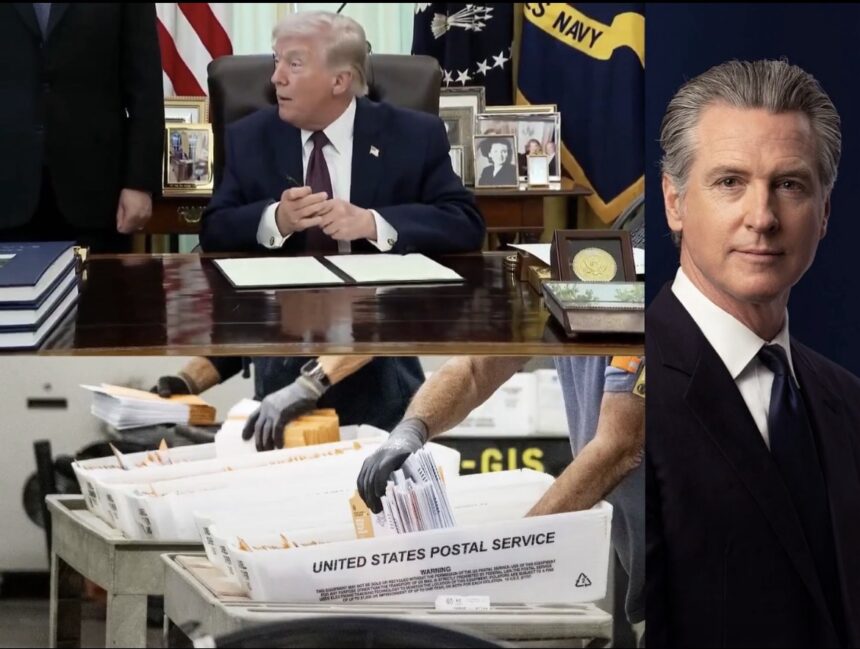
A federal court decision has drawn attention to the U.S. Postal Service’s role in distributing mail-in ballots and the requirement for states to provide voter rolls for citizenship verification. US Attorney Bill Essayli highlighted the ruling as a win for election integrity, noting its potential major impact on states like California that have resisted sharing full voter data.
The decision comes as part of broader legal battles over federal efforts to strengthen safeguards in mail voting ahead of the November 2026 midterms.

Background on the Executive Order and USPS Role
In March 2026, President Donald Trump issued an executive order focused on ensuring citizenship verification in federal elections. The order directed federal agencies, including the Department of Homeland Security and the Social Security Administration, to help compile lists of eligible citizens. It also instructed the Postal Service to deliver mail-in ballots only to voters on approved lists based on verified eligibility.
The goal was to prevent ineligible individuals, such as non-citizens, from receiving ballots through the mail. Postmaster General David Steiner had indicated that the Postal Service would not deliver ballots in states that refused to provide the required voter information.
Key Court Developments
Federal judges have issued rulings on these policies. In late June 2026, U.S. District Judge Indira Talwani in Massachusetts ruled that key sections of the executive order were legally void. The judge found they exceeded presidential authority and violated separation of powers principles, as states hold primary responsibility for running elections under the Constitution.
More Read

A separate ruling in early July 2026 by U.S. District Judge Emmet Sullivan blocked a proposed USPS rule tied to the order. That decision cited a prior settlement agreement with civil rights groups requiring timely delivery of election mail.
The Postal Service has appealed some aspects of these decisions. Legal experts note that states, not the federal government, control voter rolls and election administration, though federal law requires citizenship for voting in federal elections.
Implications for California
California operates one of the largest mail-in voting systems in the country. Critics have raised concerns about voter roll maintenance, including how quickly the state removes ineligible voters and the acceptance of certain identification forms for registration.
More Read
US Attorney Bill Essayli has been vocal about these issues. He has pushed for greater transparency and audits of California voter rolls to confirm compliance with federal citizenship requirements.

Essayli stated in comments tied to the recent ruling: “This ruling is a win for election integrity and would have significant implications for states like California that refuse to submit their voter rolls to verify compliance with federal election laws.”
He suggested California Governor Gavin Newsom would face challenges from the outcome.
Why Citizenship Verification Matters
Federal law requires U.S. citizenship to vote in federal elections. Proponents of stricter checks argue that mail-in ballots create unique risks because ballots are sent out widely without in-person verification at the time of voting.
Supporters of the USPS approach say requiring states to share voter data allows better cross-checking against federal records for citizenship status. Opponents argue the measures represent federal overreach into state-run elections and could delay or complicate ballot delivery.
What Comes Next
With appeals ongoing and the midterms approaching, states and federal agencies continue to navigate these requirements. California and other states have faced pressure to improve voter roll accuracy through existing federal programs while maintaining their own election systems.
More Read

Election officials across the country are preparing for mail ballot processing under current rules. The debate over verification standards remains active as both sides emphasize the importance of secure and accessible voting.
This development underscores ongoing tensions between federal oversight and state authority in protecting the integrity of American elections.