

On June 30, 2026, the U.S. Supreme Court issued a 6-3 decision upholding laws in Idaho and West Virginia that restrict participation in girls’ and women’s school sports to biological females. President Donald Trump quickly celebrated the ruling on Truth Social, calling it a “BIG WIN” that takes the “ridiculous situation” of men playing in women’s sports “off the table.”
The ruling is narrower than Trump’s statement suggests, but it represents a significant victory for states seeking to maintain sex-based categories in sports.17
What the Supreme Court Actually Decided
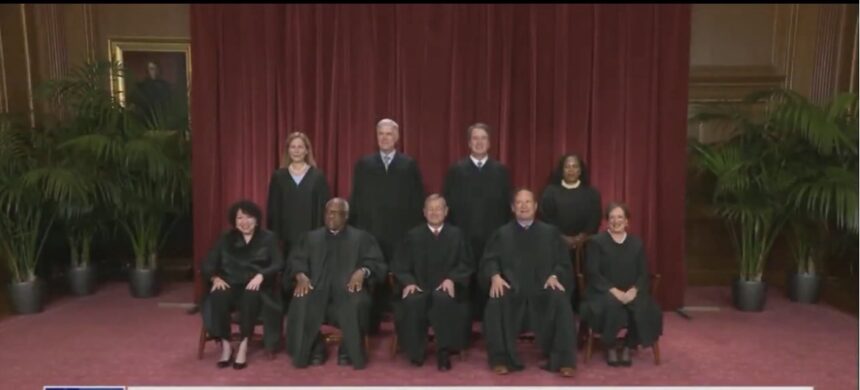
In the consolidated cases Little v. Hecox (Idaho) and West Virginia v. B.P.J., the Court ruled that states may require school sports teams to be based on biological sex at birth. The 6-3 majority held that Idaho’s and West Virginia’s laws do not violate the Equal Protection Clause of the 14th Amendment or Title IX.
Justice Brett Kavanaugh reportedly authored the majority opinion, joined by Chief Justice John Roberts and Justices Clarence Thomas, Samuel Alito, Neil Gorsuch, and Amy Coney Barrett. Justices Sonia Sotomayor, Elena Kagan, and Ketanji Brown Jackson dissented in part.
The decision directly applies only to the two states involved. However, it clears the path for the roughly 25 other states with similar laws to enforce their restrictions without immediate federal court interference.
More Read

Background: The Idaho and West Virginia Laws
- Idaho’s Fairness in Women’s Sports Act (2020): One of the first state laws to bar transgender girls and women (biological males) from female sports categories in K-12 and collegiate athletics.
- West Virginia’s Save Women’s Sports Act: Similar legislation prohibiting biological males from competing on girls’ and women’s teams.
Both laws faced legal challenges from transgender students who argued the policies discriminated on the basis of gender identity. Lower courts had issued conflicting rulings, leading to Supreme Court review.
The Court’s decision affirms that states have a legitimate interest in preserving fair competition and safety in female sports by using biological sex as the classification.
Trump’s Reaction vs. the Actual Scope
Trump posted on Truth Social shortly after the ruling:
“BIG WIN: The United States Supreme Court just RULED AGAINST MEN PLAYING IN WOMEN’S SPORTS. Wow! That takes that ridiculous situation off the table!!!”
More Read

While the ruling supports the principle Trump highlighted, it does not create a nationwide ban. States without such laws can still allow biological males to compete in female categories if they choose. The decision simply protects the authority of states that want to maintain biological sex-based divisions.
Why This Matters: Fairness and Biology in Women’s Sports
The debate centers on well-documented physiological differences between biological males and females that emerge after puberty:
- Higher testosterone levels lead to greater muscle mass, bone density, larger hearts and lungs, and superior strength, speed, and power.
- Studies show retained advantages even after hormone suppression (testosterone reduction via puberty blockers or cross-sex hormones).
- In elite and scholastic sports, these differences translate into measurable performance gaps — often 10-50% or more depending on the sport.
Proponents of the bans argue that allowing biological males into female categories undermines Title IX’s goal of providing equal opportunities for women and girls. Opponents emphasize inclusion, mental health benefits for transgender youth, and argue that individual case-by-case assessments or hormone therapy can mitigate advantages.
Empirical evidence strongly supports the view that biological sex remains the fairest and most objective basis for competitive categories in most sports.
Broader Implications
- For other states: The ruling strengthens legal defenses for existing bans in states like Florida, Texas, California (pre-existing restrictions in some contexts), and others. More states may now feel emboldened to pass or enforce similar laws.
- For transgender athletes: Biological males identifying as female will generally be limited to male or open divisions in states with these protections.
- For women’s sports overall: Advocates see this as a step toward restoring fairness and protecting female athletes from losing podium spots, scholarships, and safety in contact sports.
- Ongoing litigation: Challenges in other states or attempts to expand the ruling’s scope are likely.
Public and Political Divide
The ruling has been praised by conservatives, women’s rights groups focused on sex-based protections, and many female athletes who have spoken out about lost opportunities. Critics from progressive organizations and LGBTQ+ advocacy groups have condemned it as discriminatory.
This issue remains one of the most polarized in American culture, pitting biological reality and competitive fairness against gender identity ideology and inclusion policies.
More Read

The Bottom Line
The Supreme Court’s 6-3 decision in June 2026 affirms that states retain the power to define sports categories based on biological sex. While not a blanket national prohibition, it marks a major legal win for those seeking to preserve women’s and girls’ sports as female-only spaces.
President Trump framed it as removing the issue “off the table.” In reality, it returns the power to the states — where democratic processes and scientific understanding of biology can continue to shape policy.
Women’s sports were created to ensure fair competition. This ruling helps protect that original intent.
Key Takeaways:
- 6-3 Supreme Court decision upholding Idaho and West Virginia bans
- Biological sex, not gender identity, can determine eligibility in female sports
- Applies directly to two states but influences ~25+ others
- Trump celebrates as a “big win” for fairness
- Debate continues on biology vs. inclusion in athletics
This landmark ruling is likely to shape school and collegiate sports policies across America for years to come.