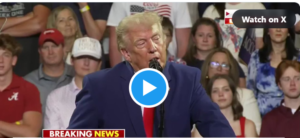


President Donald Trump has announced he will immediately ask the U.S. Supreme Court to rehear its recent decision striking down his executive order on birthright citizenship. The move comes as Spanish-language billboards near the Texas-Mexico border promoted affordable “birth packages,” igniting fresh debate over birth tourism, the 14th Amendment, and what the Founders intended for U.S. citizenship.
What Happened: Trump’s Call for Supreme Court Rehearing
On July 8, 2026, President Trump posted on Truth Social that he would petition the Supreme Court for a rehearing “IMMEDIATELY” following the Court’s June 30, 2026, 6-3 ruling in Trump v. Barbara. That decision upheld birthright citizenship for children born in the United States to parents who are not U.S. citizens or lawful permanent residents.
Trump called the ruling a “miscarriage of justice” and warned it would “destroy America if they don’t change their absolutely insane decision.” He cited reports of aggressive marketing targeting foreign nationals to give birth on U.S. soil as evidence of systemic abuse.
This marks a rare and long-shot effort. The Supreme Court has not granted a rehearing request after deciding a case since 1965.
The Texas Billboard Controversy That Fueled the Debate
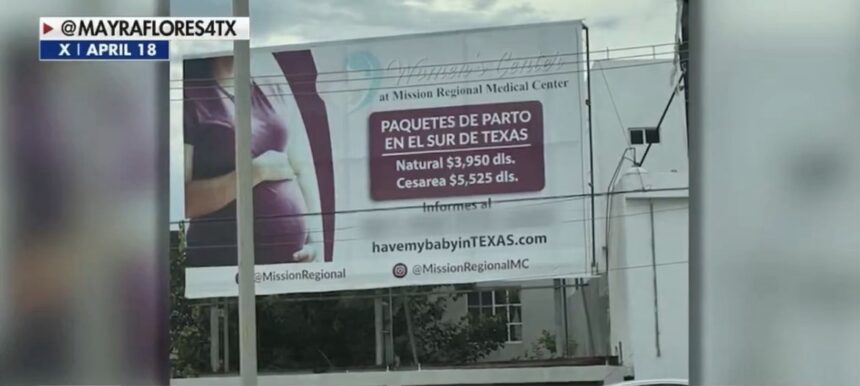
The timing of Trump’s announcement coincided with viral outrage over billboards in South Texas, particularly near Mission in the Rio Grande Valley. Spanish-language advertisements from Mission Regional Medical Center promoted “Birth Packages in South Texas” with fixed pricing:
More Read

- Natural birth: Starting at $3,950
- C-section: Starting at $5,525
The ads directed viewers to the website havemybabyintexas.com (now taken offline) and highlighted amenities like 24/7 parental visits, breastfeeding support, and private rooms.
The campaign, which reportedly began in 2021, quickly drew accusations of promoting birth tourism — the practice of traveling to the U.S. specifically to secure automatic citizenship for a child under the 14th Amendment’s Citizenship Clause.
Texas Governor Greg Abbott ordered the Texas Health and Human Services Commission (HHSC) to investigate the hospital immediately. He stated the ads appeared designed to profit from “securing United States citizenship for their children” and called American citizenship “not for sale.”
More Read
Mission Regional Medical Center responded that it was simply advertising legitimate maternity services (like hospitals nationwide), removed the materials after social media backlash, and denied facilitating any unlawful activity. The hospital is cooperating with the state probe.
Background: Birthright Citizenship and the 14th Amendment
The debate centers on the Citizenship Clause of the 14th Amendment (ratified 1868):
“All persons born or naturalized in the United States, and subject to the jurisdiction thereof, are citizens of the United States and of the State wherein they reside.”
The key phrase is “subject to the jurisdiction thereof.” Proponents of reform argue this excludes children of illegal immigrants or temporary visitors, as their parents owe allegiance to another country. Critics point to the 1898 Supreme Court case United States v. Wong Kim Ark, which granted citizenship to a child born in the U.S. to legal Chinese resident aliens.
Trump’s executive order (issued early in his second term) sought to limit automatic citizenship for children of non-citizens without lawful permanent residency. The Supreme Court rejected it in June 2026, with Chief Justice John Roberts writing the majority opinion affirming broad birthright citizenship.
Arguments on Both Sides
Supporters of reform (including Trump and many conservatives) argue:
- The Founders never intended citizenship for children of illegal entrants or tourists.
- It creates “anchor babies” that enable chain migration.
- Birth tourism and illegal immigration impose significant costs on taxpayers (education, healthcare, welfare).
- Other countries (including most of Europe) do not grant unconditional birthright citizenship.
- Recent marketing campaigns prove the policy is being exploited.
Opponents (including the Supreme Court majority and immigrant advocacy groups) argue:
More Read
- The plain text of the 14th Amendment and longstanding precedent (Wong Kim Ark) are clear.
- Changing it requires a constitutional amendment, not an executive order.
- Children born here have deep ties to the U.S. and deserve citizenship.
- Restricting it could create a stateless underclass.
What Happens Next?
A rehearing petition is procedurally difficult. It typically requires a justice who was in the majority to change their vote, which is extremely rare. Legal experts widely view success as unlikely.
Alternative paths forward include:
- Congressional legislation clarifying the 14th Amendment’s jurisdiction language.
- A constitutional amendment (difficult but possible with broad support).
- State-level actions or further litigation.
The Texas investigation into Mission Regional Medical Center could also lead to regulatory or legal consequences for the hospital.
Why This Matters Now
The combination of the Supreme Court ruling and the Texas billboard controversy has reignited one of the most contentious issues in American immigration policy. With President Trump pushing aggressively for reform and states like Texas taking action, the debate over birthright citizenship is unlikely to fade.
Whether through the courts, Congress, or constitutional change, the question of who qualifies as a U.S. citizen by birth remains central to the future of American sovereignty and immigration enforcement.
Key Takeaway: President Trump’s rehearing request highlights ongoing concerns that the current interpretation of the 14th Amendment enables exploitation via birth tourism and illegal immigration — a view bolstered by the recent Texas hospital advertising scandal.
For the latest developments on this evolving story, follow official White House and Supreme Court announcements, as well as updates from Texas state officials.