


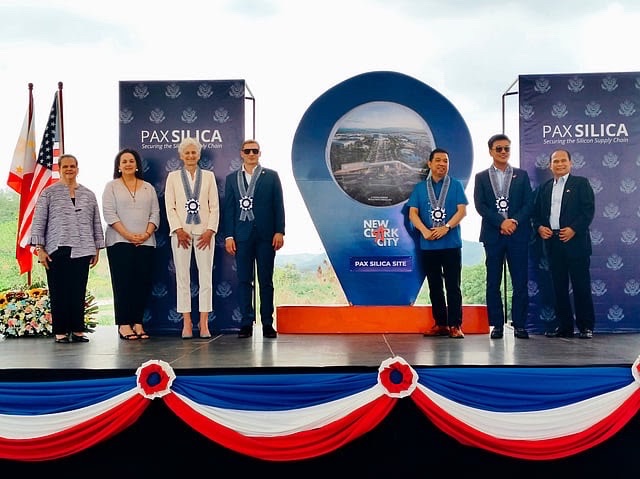
The United States and the Philippines are moving forward with a significant tech partnership through the Pax Silica initiative. This collaboration establishes a 4,000-acre AI-native industrial hub in New Clark City as part of the broader Luzon Economic Corridor. The project focuses on building secure supply chains for semiconductors, artificial intelligence infrastructure, and critical minerals while delivering economic gains for both countries.
What Is Pax Silica and Why It Matters
Pax Silica represents a US-led program launched in late 2025 to create trusted networks for advanced technologies. Under Secretary Jacob Helberg has guided the effort, which brings together allied nations to reduce vulnerabilities in global supply chains. The initiative emphasizes private sector partnerships that provide market certainty for investments in AI and chip manufacturing.
Participants align on standards for export controls, investment reviews, and technology security. The Philippines joined in April 2026, becoming one of the key nodes in this network. Other partners include Japan, South Korea, Australia, and India. This framework supports long-term capital deployment by offering predictable conditions for companies building facilities that require years of planning.
For readers interested in how nations are competing in advanced chips, explore BrieflyUSA’s report on AI semiconductors and the challenges of powering next-generation data centers.
The 4000-Acre Hub Takes Shape in New Clark City
Philippine authorities designated a 4,000-acre site in New Clark City, Tarlac Province, as the first AI-native industrial acceleration hub under Pax Silica. The location sits strategically within the Luzon Economic Corridor, a trilateral infrastructure project involving the United States, Japan, and the Philippines.
More Read

The hub will host facilities for AI infrastructure, semiconductor packaging, critical minerals processing, and advanced manufacturing. Bases Conversion and Development Authority President and CEO Joshua Bingcang described the site as a convergence point for technology firms, research institutions, and government agencies. A Pax Silica Coordination Office will operate on the premises to facilitate collaborations.
On May 18, 2026, Under Secretary Helberg visited the location alongside American investors. More than 20 companies have shown interest in the surrounding areas of the Luzon Economic Corridor. Site marking is complete, and teams are advancing investor outreach with potential groundbreaking targeted within the next two years.
New Clark City already benefits from converted former base infrastructure, a skilled young workforce, and improving connectivity. These advantages position the Philippines to move up the value chain in global tech production.
More Read

Learn more about surging demand in the chip sector through BrieflyUSA’s coverage of Samsung’s AI chip growth.
Clarifying Sovereignty and Legal Framework
Public discussion around the project included early concerns over potential special legal status for foreign investors. Some reports mentioned proposals for US common law application or diplomatic protections within the zone.3
Philippine officials have consistently rejected those ideas. The hub will function entirely under Philippine laws as a standard special economic zone. No extraterritorial jurisdiction or immunity arrangements were approved. Operations must comply with local regulations, consistent with how other investment zones operate in the country.028
Helberg emphasized that the goal is market predictability to attract capital, not any override of sovereignty. Full agreement details remain transparent and available for review. This approach mirrors successful economic zones worldwide where investors receive incentives while respecting host nation rules.
BCDA continues to manage the project to safeguard national interests while welcoming allied participation.
Economic Opportunities for the Philippines
The Pax Silica hub offers the Philippines a pathway to develop its critical minerals sector, including nickel, copper, and cobalt reserves. Domestic processing could create higher-value exports and support green technology applications.
More Read

Officials anticipate thousands of high-tech jobs, technology transfers, and reduced dependence on overseas employment. The project could accelerate digital infrastructure rollout and establish New Clark City as a Southeast Asian center for AI-related activities. Private capital from American firms and potentially Middle Eastern partners is expected to flow once permitting and infrastructure details solidify.
Power reliability remains a key consideration for energy-intensive AI operations. Philippine business groups continue to stress upgrades in electricity supply and supporting infrastructure to maximize investment returns.
Stay updated on broader trends with BrieflyUSA’s article on US intelligence agencies securing AI chips.
Strategic Role in Indo-Pacific Supply Chains
Pax Silica complements existing US efforts such as the CHIPS Act by diversifying production away from concentrated risks. The Luzon Economic Corridor integrates ports, rail, airports, and energy projects to support manufacturing scale-up. For the Philippines, participation brings capital, expertise, and access to trusted markets. For the United States, it secures reliable sources of minerals and manufacturing capacity from a close security partner.
This friend-shoring model prioritizes voluntary alignment among like-minded nations. The Philippines maintains relationships with multiple trading partners while advancing this specific collaboration. Critics who label the initiative as overly protectionist overlook the market-driven nature of the partnerships and the retention of full sovereignty by host countries.
Investment Momentum and Timeline
Teams are now coordinating details for the Coordination Office and related infrastructure. Investors seek clarity on tax incentives, permitting timelines, and utility upgrades. With legal questions resolved, planning points toward initial investments potentially starting in 2027.
The project exemplifies how targeted alliances can foster shared growth in critical technologies. As global demand for AI computing power rises, locations like New Clark City will help meet needs while building local capabilities.
For additional context on emerging AI infrastructure models, read BrieflyUSA’s piece on SpaceX entering the AI compute market.
Conclusion: Building Resilient Tech Partnerships
The Pax Silica initiative in New Clark City demonstrates a practical approach to technological collaboration. By focusing on private investment, legal clarity under Philippine jurisdiction, and mutual economic benefits, the project advances innovation without compromising sovereignty. Both nations stand to gain from stronger supply chains and new high-value industries.
As developments continue, the hub could serve as a model for similar nodes across partner countries. Follow BrieflyUSA in the technology category for ongoing analysis of AI, semiconductors, and global supply chain shifts.