

SEOUL — Samsung Electronics has become only the second Asian company to reach a $1 trillion market valuation after its shares surged 13% in a single day, driven by booming demand for artificial intelligence chips and a dramatic recovery in its semiconductor business.
The milestone puts Samsung in elite company alongside TSMC, the Taiwanese chipmaker that was the first Asian firm to cross the trillion-dollar threshold. The rapid rise reflects a remarkable turnaround for the South Korean tech giant, which just a few years ago was struggling with memory chip oversupply and intense competition.
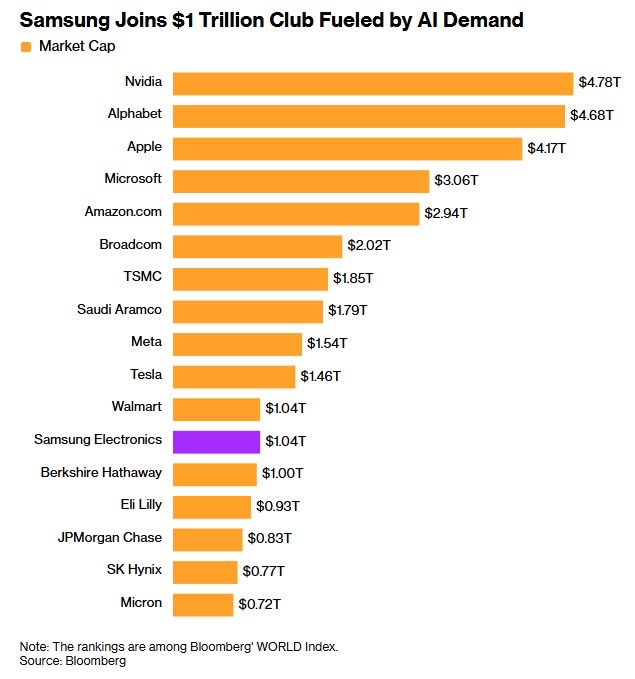
Source: Bloomberg (Market cap data visualisation)
Samsung’s semiconductor division reported a staggering 48-fold increase in profit last quarter. The memory chip market, particularly high-bandwidth memory (HBM) used in AI servers, remains severely undersupplied, and analysts expect the shortage to persist through at least 2027.
The AI Boom Powers Samsung’s Comeback
The surge is directly tied to the global AI spending frenzy. Major tech companies are pouring billions into building data centers and training large language models, creating enormous demand for advanced memory chips and logic semiconductors that Samsung produces.
Samsung has been aggressively expanding its production capacity for HBM and other AI-related chips. The company is also making progress in its foundry business (contract chip manufacturing), though it still trails far behind TSMC in that segment.
More Read

Adding to the positive momentum, reports emerged that Apple is in talks with Samsung about manufacturing some of its main processors in the United States. Such a deal would be highly significant, as Apple has relied almost exclusively on TSMC for its custom silicon. A shift toward Samsung — especially with U.S.-based production — could help both companies navigate geopolitical risks and U.S. chip policy incentives.
From “Exploding Phone” Memes to Trillion-Dollar Status
The achievement marks an impressive redemption story for Samsung. The company was once mocked internationally after the Galaxy Note 7 battery fires in 2016 led to a full product recall. Today, that episode feels like ancient history as investors focus on Samsung’s dominant position in memory chips and its growing capabilities in advanced semiconductors.
Samsung’s success also highlights South Korea’s critical role in the global tech supply chain. The country has become one of the world’s most important players in semiconductors, batteries, and displays, making it a key partner and sometimes a point of tension for both the United States and China.
More Read

What the Milestone Means
Reaching $1 trillion market capitalization is more than just a symbolic number. It reflects strong investor confidence in Samsung’s ability to capitalize on the AI revolution and adapt to shifting geopolitical realities in the chip industry.
Analysts remain bullish. Many forecast continued strong growth for Samsung’s memory business as long as AI investment stays elevated. However, risks remain. The company still faces stiff competition from SK Hynix in HBM chips and from TSMC in foundry services. Geopolitical tensions between the U.S. and China could also disrupt supply chains or force difficult choices for Samsung, which sells heavily into both markets.
For South Korea’s economy, Samsung’s performance is hugely important. The company is a cornerstone of the national economy, and its success often lifts the broader stock market and currency.
Broader Context of the AI-Driven Market
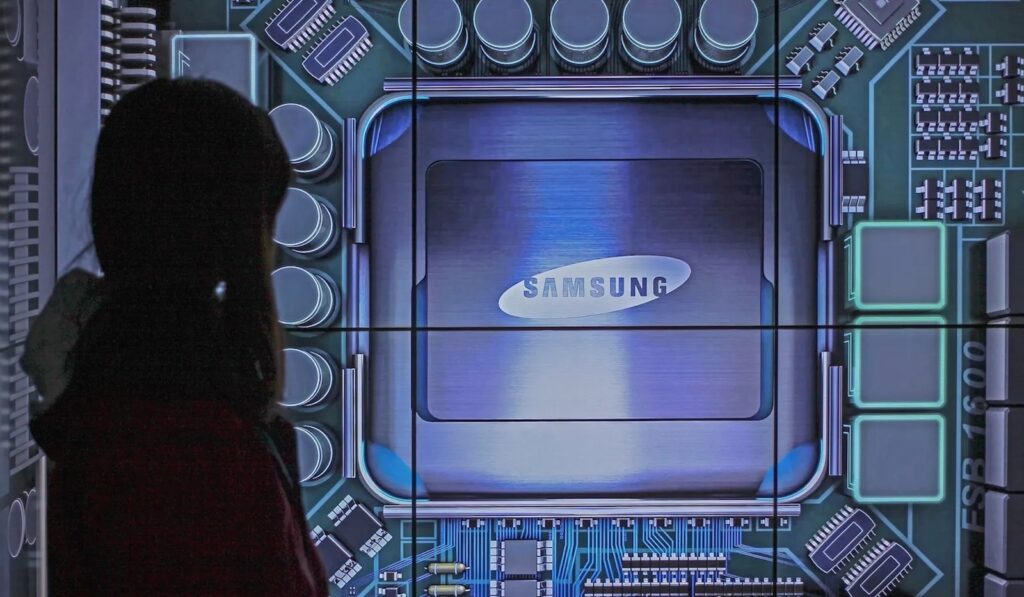
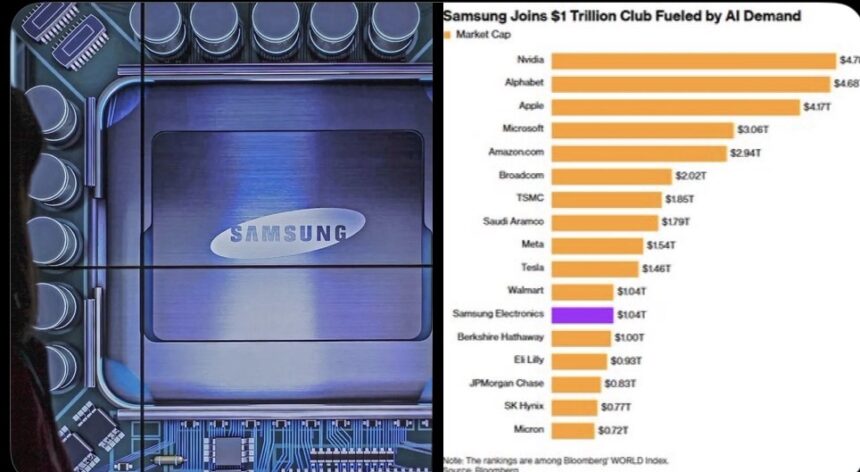
For the Samsung chip image:
Image courtesy of Samsung Electronics / press materials
Samsung’s rise to the trillion-dollar club underscores a larger trend: the artificial intelligence boom is creating new trillion-dollar companies at a remarkable pace. Nvidia led the way with its explosive growth in AI GPUs, and now Samsung is benefiting from the massive demand for memory that powers those systems.
The AI spending wave has minted winners across the entire semiconductor value chain from chip designers and manufacturers to memory makers and equipment suppliers. How long this boom lasts remains one of the biggest questions in global markets today.
For now, Samsung is riding high. From a company once defined by a major product failure, it has transformed itself into one of the world’s most valuable corporations, powered by the insatiable demand for smarter, faster, and more powerful AI systems.
More Read

The coming years will test whether Samsung can maintain this momentum, expand its foundry business, and navigate the complex U.S.-China tech rivalry. But for today, the South Korean giant has every reason to celebrate crossing the $1 trillion threshold.