

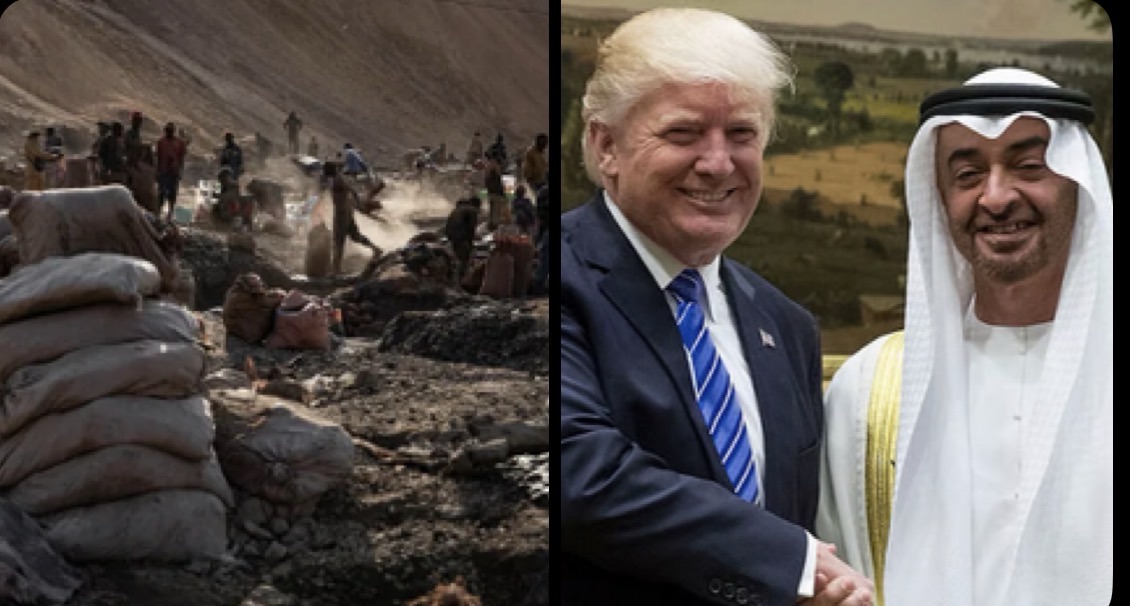
KINSHASA — The Democratic Republic of the Congo has launched an ambitious plan to create a dedicated paramilitary unit tasked with protecting the country’s vast mineral wealth. Announced this week by the General Inspectorate of Mines, the new “Mining Guard” will start with around 3,000 armed personnel by the end of 2026 and grow to as many as 20,000 by 2028. An initial $100 million investment, backed by the United States and the United Arab Emirates, will fund recruitment, training, and early deployment.
This move marks a significant shift in how the DRC intends to manage security around its mines. Instead of relying solely on the national army, which has often been accused of involvement in smuggling and human rights abuses, the government wants a specialized force focused on securing cobalt, coltan, copper, and other strategic minerals from extraction sites through to export points.
The unit’s responsibilities will go beyond simple protection. Officials say the Mining Guard will help make supply chains more traceable, crack down on smuggling, escort mineral shipments, and create a safer environment for legitimate investors. In many remote mining areas, especially in the east, armed groups and local militias have long extorted operators and workers. The new force aims to push those groups out and bring some order to chaotic artisanal and industrial sites.
Why Now? The Global Race for Critical Minerals
The timing of this announcement is no coincidence. Cobalt and coltan are essential for electric vehicle batteries, smartphones, and advanced electronics. Copper remains vital for power infrastructure and renewable energy systems. The DRC sits on some of the world’s richest deposits of these materials. It produces more than 70 percent of global cobalt supply, giving it enormous strategic importance in the clean energy transition.
Western governments and companies have grown increasingly concerned about heavy Chinese influence in Congolese mining. Chinese firms control large portions of industrial cobalt and copper operations. By creating a more secure and transparent framework, Kinshasa hopes to attract greater American and Gulf investment and reduce reliance on any single foreign partner.
The United States and UAE see clear strategic value here. Reliable access to these minerals supports domestic manufacturing goals for EVs, semiconductors, and defense technologies. For Washington, diversifying away from China-dominated supply chains has become a national security priority. Abu Dhabi brings both capital and experience in managing large-scale security arrangements in challenging environments.
Details of the Mining Guard Plan
According to the Inspectorate, the first contingent of 2,500 to 3,000 guards should be operational by December 2026 after six months of training alongside Congolese military units. The force will eventually operate across all 22 mining provinces, taking over many security duties currently handled by regular troops.
The $100 million initial budget covers recruitment, equipment, and basic infrastructure. Additional funding is expected as the program scales. Recruits will reportedly receive formal salaries and training that emphasizes discipline and professionalism, qualities often missing in parts of the national army operating in mining zones.
The plan also includes efforts to improve traceability. Better documentation and escort protocols for shipments could help international buyers verify that minerals are conflict-free and not linked to illegal armed groups. This matters increasingly as governments in Europe and North America tighten due diligence rules on supply chains.
Challenges on the Ground
Implementing this force will not be easy. Eastern Congo remains plagued by dozens of armed groups. Some militias have deep roots in local communities and generate significant income by taxing mine workers and operators. Displacing them could spark resistance and new cycles of violence.
There are also questions about oversight and accountability. A paramilitary unit with broad powers in remote areas carries risks of abuse if command structures and rules of engagement are not clearly defined. Human rights organizations have raised concerns about past security operations in Congolese mines, where civilians sometimes bore the brunt of enforcement actions.
The government will need to balance the need for strong security with efforts to formalize artisanal mining, which employs hundreds of thousands of Congolese but often operates under dangerous and exploitative conditions. Simply pushing armed groups away without offering alternatives could worsen poverty and fuel recruitment into rebel movements.
Training standards will be another key test. Six months may be enough to produce basic guards, but building a professional 20,000-strong force capable of operating effectively across vast and difficult terrain will require sustained investment and external support over several years.
Geopolitical Dimensions
This initiative fits into a broader pattern of competition for African resources. While China has focused heavily on direct ownership and infrastructure-for-minerals deals, the US and its partners are trying a different approach: supporting local capacity for security and governance while encouraging Western companies to invest under clearer rules.
Success could help the DRC capture more value from its resources and reduce the chronic instability that has kept much of the population in poverty despite enormous underground wealth. Failure, however, might create yet another armed actor in an already crowded security landscape.
For the United States and UAE, the stakes involve both economic interests and strategic positioning. Secure supplies of cobalt and coltan matter for battery production and high-tech manufacturing. A more stable mining sector in the DRC could also serve as a counterweight to Chinese dominance in critical materials.
What Comes Next
The Mining Guard is still in its early planning phase. Recruitment is expected to begin soon, with the first deployments focused on high-priority industrial sites in the south and east. Over the next two years, authorities will need to demonstrate that the force can deliver real improvements in security and transparency without triggering new conflicts.
International partners will likely provide training, equipment, and monitoring support. How closely they engage on issues such as human rights and corruption will influence both the program’s effectiveness and its international legitimacy.
For ordinary Congolese, especially those living near mining areas, the announcement brings a mix of hope and skepticism. Many have heard promises of better management of mineral wealth before, only to see little change in daily conditions. If the Mining Guard succeeds in reducing militia extortion and bringing more orderly operations, it could improve safety and create formal jobs. If it becomes another layer of predation, frustration could grow.
As global demand for the minerals that power the green economy continues to rise, the DRC’s latest security experiment will be closely watched. It represents an attempt to use Western and Gulf funding combined with local manpower to secure strategic resources in one of Africa’s most challenging environments. Whether this model can deliver stability and shared benefits remains an open question that will unfold over the coming years.