

New Model Flags Cancer Signatures on Routine CT Scans Up to Three Years Before Any Tumor Is Visible, Study Finds
Why This Disease Has Resisted Progress, and Why That May Be Changing
Pancreatic cancer kills at a rate that has barely shifted in decades. Of the roughly 67,500 Americans expected to be diagnosed with the disease in 2026, more than 52,700 are projected to die from it. The five-year survival rate has remained flat at 13%, making pancreatic cancer the only major cancer with a survival rate below 20%. The reason is not that treatments are ineffective at every stage. It is that by the time most patients receive a diagnosis, the cancer has already advanced beyond the point where curative surgery is an option.
That is the wall Mayo Clinic researchers say they have now found a way to get in front of.
What the AI Does That Radiologists Cannot
A Mayo Clinic-developed artificial intelligence model can identify subtle signs of pancreatic cancer on routine abdominal CT scans up to three years before clinical diagnosis, at a point when tumors are not yet visible and curative treatment may still be possible.
The system, known as the Radiomics-based Early Detection Model, or REDMOD, works by measuring hundreds of features describing tissue texture and structure, capturing faint biological changes before tumors are visible to the human eye.
More Read

The results, published Tuesday in the peer-reviewed journal Gut, were built on a substantial evidence base. The study reviewed approximately 2,000 CT scans, including those from patients later diagnosed with pancreatic cancer, all of which had originally been interpreted as normal by radiologists.
What REDMOD found in those scans is clinically significant. The model identified 73% of prediagnostic cancers at a median of roughly 16 months before diagnosis, nearly double the detection rate of specialists reviewing the same scans without AI assistance. In scans taken more than two years before diagnosis, the AI detected nearly three times as many early cancers as specialists working unaided.
The Significance of “Normal-Appearing”
The phrase that runs through the research is worth sitting with: these were scans that had already been reviewed by trained radiologists and cleared. The cancer was there. The human eye simply had no way to see it.
More Read

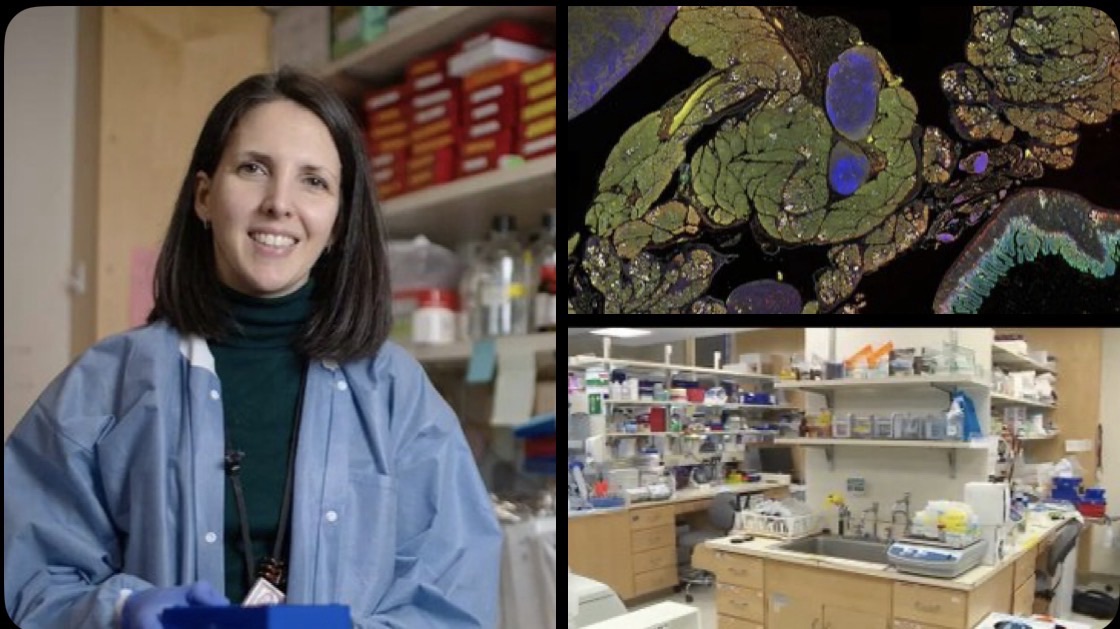
“The greatest barrier to saving lives from pancreatic cancer has been our inability to see the disease when it is still curable,” said Ajit Goenka, M.D., the study’s senior author and a Mayo Clinic radiologist and nuclear medicine specialist. “This AI can now identify the signature of cancer from a normal-appearing pancreas, and it can do so reliably over time and across diverse clinical settings.”
That last phrase matters for practical deployment. A tool that performs well in one institution’s controlled dataset but falls apart when applied across different hospitals and imaging equipment has limited real-world value. The team validated REDMOD across CT scans from multiple institutions, imaging systems, and protocols, demonstrating consistent performance beyond a single dataset. In patients with multiple scans, the AI also produced stable results months apart, supporting its potential use for ongoing monitoring over time.
Who Could Benefit Most
REDMOD is not designed to require a new kind of scan. That is part of what gives it practical reach. The model is built to analyze CT scans already obtained for other reasons, particularly in high-risk patients such as those with new-onset diabetes, flagging elevated cancer risk before any visible mass appears.
New-onset diabetes in adults over 50 has long been recognized as a potential early signal of pancreatic cancer. The ability to retrospectively analyze existing imaging from that population, rather than ordering specialized screening, could allow clinicians to identify at-risk patients without adding significant cost or procedural burden to the system.
Mayo Clinic says the model’s demonstrated ability to function across different hospitals and imaging systems means it could help patients nationwide if widely adopted.
What Comes Next
The research is not stopping at publication. Researchers are now advancing this work into clinical testing through a prospective study called AI-PACED, which evaluates how clinicians can integrate AI-guided detection into the care of patients at elevated risk for the disease. The study combines AI analysis of routine imaging with longitudinal follow-up to assess performance, including early detection rates, false positives, and clinical outcomes.
The false positive question is a real one. Any screening tool that flags too many patients incorrectly creates its own burden, in unnecessary procedures, patient anxiety, and system cost. How REDMOD performs on that measure at scale, outside of research conditions, will be closely watched.
The work sits within Mayo Clinic’s broader Precure initiative, which aims to predict and prevent disease by identifying the earliest biological changes in the body before symptoms appear.
Why the Timing Matters
Pancreatic cancer diagnoses and mortality rates are climbing, and the five-year survival rate for pancreatic adenocarcinoma, the most common form, sits at just 8%. The disease is on track to become the second-leading cause of cancer death in the United States within years, according to projections from the Pancreatic Cancer Action Network.
Against that backdrop, a validated tool that can surface cancer signals on imaging that already exists in the clinical system, years before a tumor would otherwise be caught, represents a meaningful shift in what early detection for this disease could look like.
The model identified subtle changes in routine CT scans at an average of roughly 475 days before patients were formally diagnosed , according to the Bloomberg-cited study data. For a cancer where the difference between a stage I and stage IV diagnosis is often the difference between surgery and palliative care, those 475 days carry considerable weight.
The research has been years in the making. Whether it translates into changed outcomes at the population level now depends on what happens next: clinical validation, regulatory review, and adoption decisions by health systems that have historically been slow to integrate AI-assisted tools into standard diagnostic workflows.
The study, conducted by Mayo Clinic researchers and collaborators, was published April 29, 2026 in Gut, a peer-reviewed journal of gastroenterology. Clinical trials under the AI-PACED study are ongoing.