

DUBAI — Authorities in the United Arab Emirates issued a missile alert across Dubai on Monday, the first such warning since a fragile ceasefire took hold in the Iran conflict. Mobile phone alerts urged residents to seek immediate shelter, triggering a brief period of anxiety in one of the world’s busiest and most cosmopolitan cities.
The alert was later cleared, with officials stating that the threat had been neutralized by UAE air defenses. No injuries or damage were reported. However, the incident has heightened concerns that the fragile pause in hostilities between Iran and the U.S.-led coalition may be breaking down.
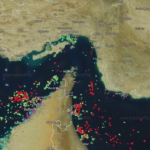
The warning comes amid ongoing volatility in the Gulf region. Even after the ceasefire announcement, sporadic incidents and accusations of violations have continued. Iran has repeatedly threatened to resume attacks on shipping and regional targets if the U.S. naval blockade in the Strait of Hormuz is not lifted.
What Happened in Dubai
According to local reports and social media posts, residents across Dubai received emergency notifications on their phones instructing them to take cover immediately due to a potential incoming missile threat. The alert system, which is highly advanced in the UAE, is designed to give people minutes to reach safety in the event of incoming projectiles.
UAE air defense systems have successfully intercepted multiple Iranian drones and missiles in recent months. Monday’s alert appears to have followed the same pattern — detection of a possible threat followed by rapid interception.
More Read

The fact that the alert reached Dubai, far from the immediate conflict zone near the Strait of Hormuz, underscores how regional tensions can quickly affect civilian life across the Gulf. Dubai is a global hub for business, tourism, and finance, and any disruption there carries significant economic implications.
Fragile Ceasefire Under Strain
The ceasefire between Iran and the U.S.-Israeli coalition was announced several weeks ago after intense fighting that included direct Iranian missile strikes on Israel and a sustained U.S. naval blockade. While the pause brought temporary relief to global oil markets and shipping, both sides have accused each other of violations.
Iran has warned that it will respond forcefully if the blockade continues or if further strikes target its territory. Meanwhile, the United States and its partners have maintained that the naval presence in the Strait of Hormuz is necessary to prevent Iran from exporting oil and funding proxy militias.
More Read

Monday’s missile alert in Dubai is being viewed by many analysts as a worrying sign that the ceasefire is fragile and that miscalculations or deliberate provocations could quickly restart direct hostilities.
Impact on the Region and Global Markets
The Gulf states, particularly the UAE and Saudi Arabia, have tried to stay relatively neutral while quietly supporting efforts to contain Iranian influence. However, repeated alerts and the risk of renewed attacks create economic uncertainty. Dubai and Abu Dhabi rely heavily on stability to maintain their roles as international business and tourism centers.
Global oil prices reacted nervously to the news, with traders watching closely for any sign that shipping through the Strait of Hormuz could face renewed disruption. Although the alert was short-lived, it served as a reminder that one incident could rapidly escalate into a broader conflict with serious consequences for energy supplies and the world economy.
What Comes Next
UAE officials have not yet provided detailed information about the origin of the suspected threat. Investigations are likely underway to determine whether it was an actual Iranian launch, a false alarm, or possibly an action by one of Iran’s proxy groups.
For residents of the UAE, the alert is a stark reminder that the country is not entirely insulated from the regional conflict, despite its strong air defenses and diplomatic balancing act.
The incident also puts pressure on diplomatic efforts aimed at turning the temporary ceasefire into a more permanent agreement. Mediators, including those from Qatar, Oman, and Pakistan, have been working behind the scenes, but deep mistrust between Washington and Tehran continues to complicate negotiations.
More Read

As tensions simmer once again in the Gulf, Monday’s missile alert in Dubai serves as a warning that the region remains on edge. Even a brief scare is enough to remind governments, businesses, and ordinary people how quickly stability can unravel in one of the world’s most critical energy corridors.