

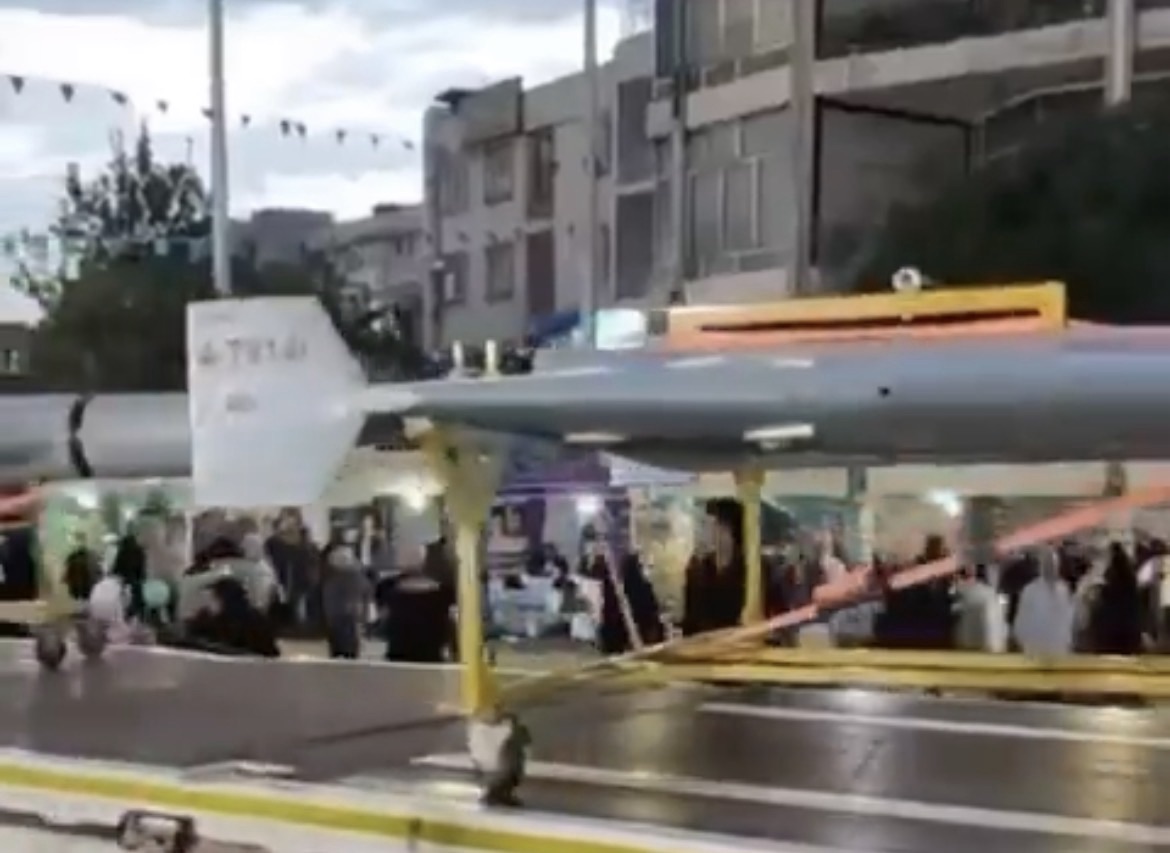
TEHRAN — Iranian state media has released footage showing columns of Shahed-136 “kamikaze” drones paraded through the streets of Tehran during large public rallies in support of the country’s armed forces. The display comes as Iran faces a tightening U.S. naval blockade in the Strait of Hormuz and continued pressure from Israeli and American strikes.
The Shahed-136, a low-cost, propeller-driven drone capable of carrying a modest warhead over long distances, has become one of Iran’s signature weapons in recent years. It gained international attention after Russia used large numbers of them in its war against Ukraine. Iran produces the drones domestically and has supplied versions to allied militias across the region.
In the latest rallies, the drones were mounted on trucks and driven through crowded streets while crowds waved flags and chanted in support of the military. State television described the events as a demonstration of national unity and military readiness in the face of foreign aggression.
Timing and Message Behind the Parade
The parade occurs at a sensitive moment. The U.S. naval blockade has dramatically reduced shipping through the Strait of Hormuz, Iran’s oil exports have been heavily disrupted, and the country’s economy is under severe strain. Earlier this week, Iran’s Parliament Deputy Speaker issued a strong warning that the United States must accept Tehran’s demands or face the “full resistance of the Iranian nation.”
Analysts see the public display of Shahed-136 drones as serving multiple purposes:
- Domestic morale: With sanctions biting and daily life affected by economic hardship, the regime is trying to project resilience and strength to its own population.
- Deterrence: By showing that it still possesses significant stocks of these drones, Iran signals it retains the ability to conduct asymmetric attacks on shipping, U.S. bases in the region, or Israeli targets if pressure continues.
- Psychological messaging: The Shahed-136 is relatively cheap (estimated at $20,000–$35,000 per unit) compared to the expensive Western missiles and interceptors used to shoot them down. Iran wants to remind its adversaries that it can sustain a war of attrition by launching swarms that drain expensive defensive systems.
Capabilities and Limitations of the Shahed-136
The Shahed-136 is slow compared to ballistic or cruise missiles, making it easier to detect and intercept with modern air defenses. However, when launched in large numbers, it can overwhelm defenses and force opponents to expend high-value interceptors like Patriots or THAADs. Its small size and low cost make it an ideal weapon for prolonged, low-intensity campaigns.
Iran has significantly expanded its drone production capacity in recent years. Western intelligence estimates suggest Tehran can manufacture hundreds of these systems per month, though exact numbers remain classified. The regime has also transferred the technology to proxy groups such as the Houthis in Yemen and various militias in Iraq and Syria.
Despite the public display, military experts caution that parades do not necessarily reflect current operational readiness. Many of the drones shown may be older models or training units. Sustained U.S. and Israeli strikes on Iranian military infrastructure have likely damaged some production and storage facilities.
Broader Context of the Conflict
The rallies follow weeks of escalating tensions. The U.S. has maintained its naval blockade, severely limiting Iran’s ability to export oil — its primary source of revenue. At the same time, Iran has threatened to respond with “practical and unprecedented action” if the pressure continues.
The Shahed-136 has played a central role in Iran’s asymmetric strategy. It allows the country to project power without risking its more valuable conventional assets. In a prolonged conflict, Iran’s doctrine appears to rely on swarming tactics, proxy attacks, and attempts to disrupt shipping in key waterways.
For the United States and its allies, the parades serve as a reminder that Iran still possesses tools to prolong the fight even as its conventional navy and air force have taken heavy losses.
What It Means Going Forward
The public showcasing of drones is unlikely to change the immediate military balance, but it does complicate diplomatic efforts. Hardline elements within Iran appear determined to project defiance rather than compromise. At the same time, the regime must balance this tough rhetoric with the reality of economic pain caused by the blockade and lost oil revenue.
Observers will be watching whether the parades are followed by actual increased drone activity — either by Iranian forces or their proxies. A surge in Shahed-136 attacks on shipping in the Red Sea or Arabian Sea could further escalate the situation and draw in more regional actors.
For now, the images from Tehran serve as classic wartime propaganda: a mixture of defiance, national pride, and a warning to adversaries. Whether this show of force boosts domestic support or simply highlights Iran’s reliance on low-cost, high-volume weapons remains to be seen.
As the conflict enters a new phase, the Shahed-136 will likely remain one of Iran’s most frequently used tools — not because it is the most advanced, but because it is expendable, producible, and psychologically effective in a war of attrition.