

President Cites Israel’s Image, Not Civilian Casualties, as His Primary Objection to the Bombing Campaign
The Words Used, and the Ones Left Out, Tell a Story of Their Own
In the long and carefully managed history of American presidents navigating the politics of the U.S.-Israel relationship, public criticism of Israeli military conduct directed at a sitting prime minister has almost always been delivered in euphemism, if delivered at all. President Donald Trump appears to have set that convention aside.
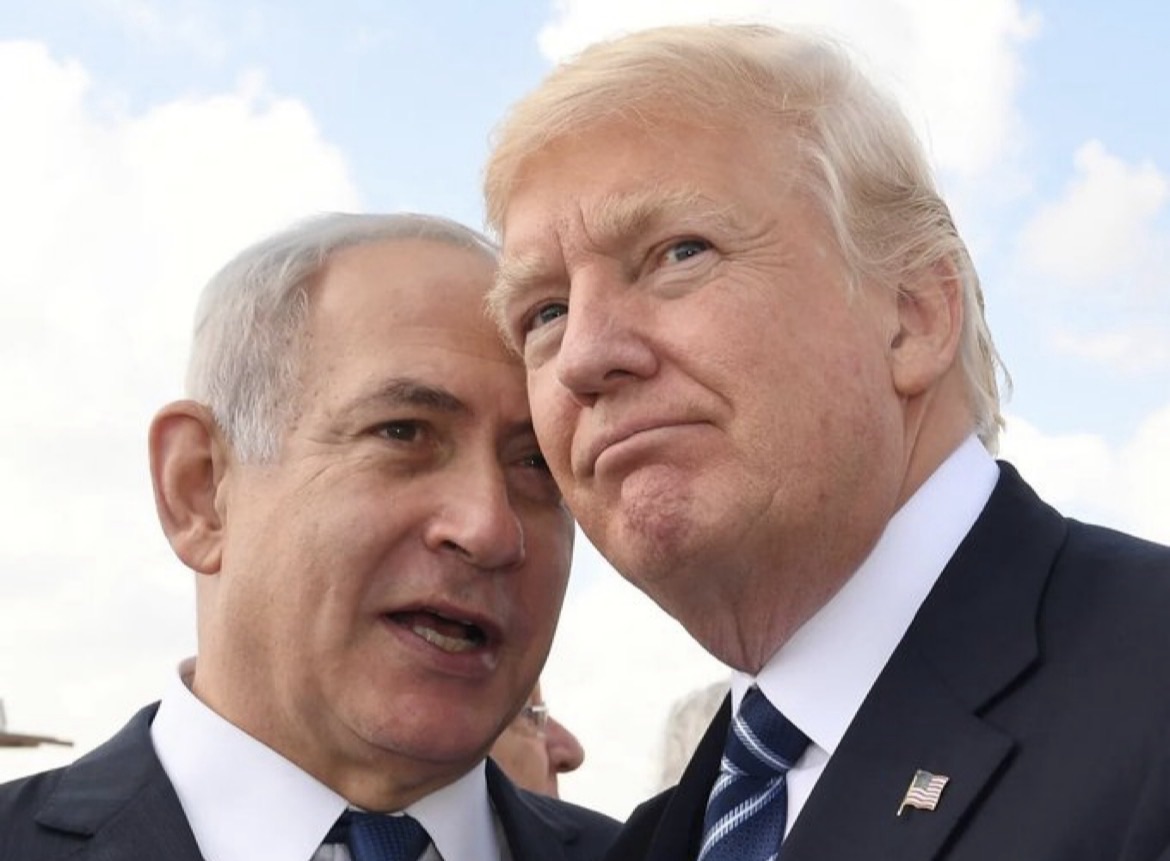
Trump confirmed in recent days that he personally told Israeli Prime Minister Benjamin Netanyahu to conduct strikes in Lebanon with greater precision and restraint, describing the scale of the bombing campaign as damaging not because of its human toll, but because of its effect on Israel’s standing.
“I told him he has to do it more surgically,” Trump said. “Not knock down buildings. It is too terrible and makes Israel look bad.”
The statement, unambiguous in its bluntness, carries weight not just for what it demands, but for the reasoning behind the demand.
The Framing That Set This Apart
Every word a sitting U.S. president uses in reference to a close ally’s military conduct is, in diplomatic terms, a choice. Trump’s choice was notable.
More Read

He did not invoke international humanitarian law. He did not reference the death toll, which Lebanon’s authorities have described as among the highest single-day counts since the start of the current offensive. He did not speak to the targeting of civilian infrastructure. His objection, as stated publicly, was reputational: the strikes make Israel look bad.
That framing will be read differently depending on who is reading it. For supporters of the administration, it reflects a clear-eyed, transactional foreign policy that skips over moralizing language in favor of direct results. For critics, it raises a pointed question: if the visual of flattened buildings is the problem and not the buildings being flattened, what exactly is the objection?
Whether cynical or strategic, the comment represents a break from the rhetorical traditions of the U.S.-Israel alliance, under which American presidents have historically either withheld criticism entirely or cloaked it in language centered on process, proportionality, or the protection of civilians.
More Read

What Was Happening on the Ground
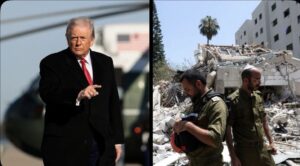
The context behind the exchange makes the rebuke more significant. Israel launched its most intense strikes in Lebanon since the current Iran war broke out earlier this year, striking 100 sites across Lebanon in just 10 minutes.
Trump’s phone call to Netanyahu came shortly after the Israeli prime minister publicly vowed to continue striking Lebanon, and was followed by a day in which Israel conducted what observers described as the single largest bombing campaign in Lebanon since the beginning of the Iran war.
Netanyahu and his aides were caught off guard by Trump’s public statements, with Israeli officials scrambling to contact the White House for clarification after finding out through the media. The Israeli ambassador to Washington was among those who reached out, seeking to understand whether U.S. policy had fundamentally shifted.
Trump went further in a separate interview, stating plainly: “Israel has to stop. They can’t continue to blow buildings up. I am not gonna allow it.”
The language, with its implication that a U.S. president is issuing a direct operational instruction to an Israeli prime minister, would have been unthinkable in prior administrations, analysts noted.
How Netanyahu Responded
Following the exchange, Trump said Netanyahu would “low-key it,” adding: “He’s going to low-key a little bit, but he’s going to be absolutely fine.”
More Read

Netanyahu subsequently posted that he had directed his government to open direct negotiations with Lebanon as soon as possible, with a focus on the disarmament of Hezbollah and the establishment of peaceful relations between the two countries.
A ceasefire between Israel and Lebanon was eventually brokered, set to last 10 days, with Israeli forces permitted to remain in positions seized in southern Lebanon. The administration expressed hope the temporary truce would become a permanent arrangement.
Whether that outcome was the product of Trump’s pressure or of broader diplomatic maneuvering remains a matter of debate. What is less debatable is the manner in which the pressure was applied.
A Shift in the Language of Alliance
American presidents have long maintained a studied deference when addressing Israeli military operations, even during moments of significant tension. President George W. Bush urged Israel to show “restraint” during the 2006 Lebanon war while stopping well short of direct criticism. President Barack Obama’s most pointed criticisms of Israeli settlement expansion were met with fierce domestic pushback and careful diplomatic language.
Trump, who built his first term partly on a posture of unconditional support for Israel, including moving the U.S. Embassy to Jerusalem and recognizing Israeli sovereignty over the Golan Heights, appears to be operating from a different calculation in his second term, one shaped in part by the broader U.S.-Iran ceasefire that Lebanon’s continued bombardment was threatening to destabilize.
Iran indicated that the two-week ceasefire it reached with the U.S. included a halt to fighting between Israel and Hezbollah, while Israel and the Trump administration maintained that Lebanon was never part of that agreement. The contradiction put Washington in the position of having to manage Israeli military activity in order to protect a deal it had just negotiated.
In that context, Trump’s rebuke of Netanyahu may be less a moral statement and more a transactional correction. The question of which reading is more unsettling is one that foreign policy observers, and the broader public, are left to answer themselves.
This report is based on statements made by President Trump in interviews with Axios and NBC News, corroborated by reporting from The Times of Israel and The Hill. Ceasefire conditions remain fluid as of the time of publication.