

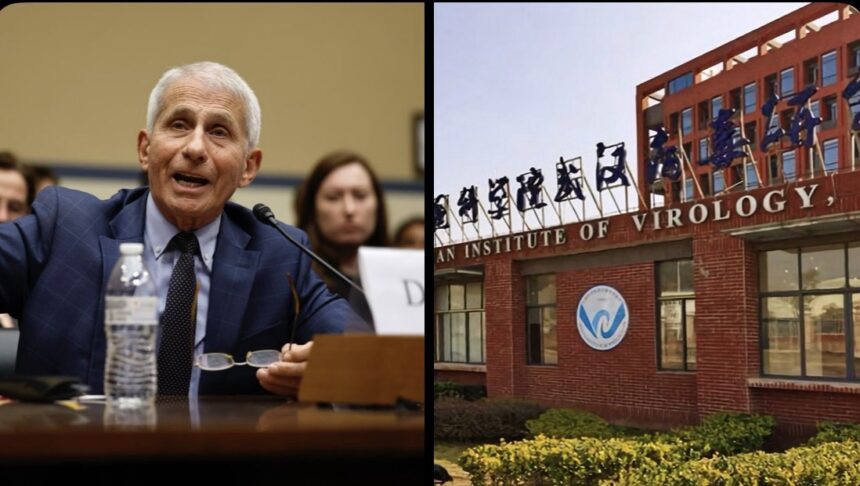
Dr. Anthony Fauci did not create COVID-19, has never been charged with a crime, and was preemptively pardoned by President Biden before leaving office. What remains genuinely disputed is whether federally funded research he oversaw contributed to the pandemic’s origin, and whether he was fully forthcoming with Congress and the public about that research and his own role in shaping the government’s early investigation into where the virus came from.

What Happened?
In one of her final acts as Director of National Intelligence, Tulsi Gabbard released a batch of declassified documents on June 18, 2026, accusing Fauci of funding dangerous research at the Wuhan Institute of Virology that she says sparked the pandemic, manipulating intelligence assessments, lying to Congress, and using what she called a “deep state playbook” to punish scientists who disagreed with him. Her office’s headline claim, posted on the ODNI website, read: “Fauci Funded Wuhan Lab Research That Sparked COVID.”
The release reopened one of the most contentious fights of the pandemic era, one that has continued for years through congressional hearings, a criminal referral request, a presidential pardon, and now a fresh round of document based accusations. Independent fact-checks from CNN and the legal analysis outlet Lawfare, after reviewing the same documents Gabbard released, concluded that the materials do not support several of her central claims. Meanwhile, Senate Homeland Security Chairmanx. Rand Paul announced he is subpoenaing Fauci to testify before Congress again in July, keeping the underlying dispute very much alive regardless of how the documents themselves hold up.
What’s Actually Been Proven
Several elements of this story are well established and not seriously disputed by anyone who has reviewed the record.
- Federal funding did reach the Wuhan Institute of Virology. The National Institute of Allergy and Infectious Diseases, which Fauci led for 38 years, awarded grants to the nonprofit research group EcoHealth Alliance. A portion of that federal grant money was subcontracted to the Wuhan Institute of Virology for coronavirus research. This funding chain is documented and not in dispute.
- Whether that research qualified as “gain-of-function” is genuinely contested. The term generally describes experiments that modify a virus, often to study how it might spread, infect a host, or evolve, in ways that could make it more dangerous or more transmissible. Fauci has repeatedly told Congress, including in 2024 testimony, that NIH did not fund gain-of-function research that created the virus behind the pandemic. Critics argue the funded research met a reasonable definition of gain-of-function regardless of the label NIH applied to it.
- U.S. intelligence agencies remain divided on COVID’s origin. After multiple formal reviews, the intelligence community has never reached a unified conclusion. Some agencies, including the FBI, have leaned toward a lab-related origin with varying degrees of confidence. Others have favored natural spillover from an animal host. No agency has claimed high confidence in either direction as of the most recent assessments.
- There is no evidence the virus was engineered as a weapon. Despite years of speculation, U.S. intelligence agencies have consistently agreed on this narrower point: multiple government reviews have found no evidence that SARS-CoV-2 was deliberately engineered as a bioweapon or intentionally released.
- Fauci offered informal input to intelligence officials reviewing COVID’s origins. Declassified emails confirm that in 2021, intelligence analysts working on a 90-day study of COVID’s origins consulted Fauci, given his background, and that he recommended specific researchers the intelligence community might want to interview. The documents show officials debated internally whether to act on his recommendations and ultimately proceeded with some of that outreach.
- China obstructed early investigations. Independent of the Fauci dispute, it is well documented that Chinese authorities restricted international investigators’ access to the Wuhan Institute of Virology, withheld raw data on early cases, and delayed sharing genetic sequencing information in the pandemic’s first weeks, actions that outside scientists and multiple governments have said made establishing a definitive origin far harder.
- Biden pardoned Fauci preemptively, not for any proven crime. On January 20, 2025, hours before leaving office, President Biden issued Fauci a preemptive pardon covering any federal offenses tied to his government service between 2014 and January 19, 2025. Biden explicitly stated the pardon was not an admission of wrongdoing, and said it was intended to prevent what he called unjustified, politically motivated prosecution. Fauci has never been charged with a crime.
What Remains Alleged, Not Proven
This is where the current fight actually lives, and where the declassified documents fall short of the claims made about them.
More Read
- That Fauci “funded Wuhan lab research that sparked COVID.” This is the headline claim from Gabbard’s release, but the documents she published do not establish that the pandemic originated from the specific NIH-funded research at the Wuhan Institute of Virology. The origin of COVID-19 remains formally undetermined by U.S. intelligence agencies. A lab-associated incident is considered plausible; so is natural spillover. Neither has been proven.
- That Fauci “manipulated intelligence assessments.” CNN’s review of the documents found that while they show Fauci offering opinions and naming researchers he believed the intelligence community should consult, they do not show him issuing orders, altering intelligence products, or controlling the outcome of any assessment. One official’s account cited in the documents specifically noted the CIA was already planning to contact several of the researchers Fauci mentioned, independent of his suggestion.
- That Fauci suppressed lab-leak-friendly experts from being consulted. An internal ODNI account declassified in the same release directly undercuts this claim. One official wrote that accusations from Republican lawmakers that the intelligence community had ignored lab-leak-friendly experts were, in that official’s words, “kind of laughable, because every expert they named was consulted by the IC.”
- That Fauci “lied to Congress” in his 2024 testimony. Gabbard’s office points to a six-word answer Fauci gave when asked whether he had spoken with intelligence agencies about viral research. Fact-checkers who reviewed the transcript found the exchange came at the end of a long, multi-part line of questioning, making the precise meaning of his answer genuinely ambiguous rather than a clear-cut false statement. Reasonable people can disagree about how to interpret it, but it does not meet the bar of a proven lie.
- That there is “a path” to prosecuting Fauci. Gabbard suggested on social media that new legal avenues exist despite the pardon. Legal analysts have noted that Biden’s pardon covers any federal offenses connected to Fauci’s government service through January 19, 2025, and that no clear legal basis for prosecution over the conduct described in the documents has been identified.
- Whistleblower retaliation claims remain under review, not confirmed. Gabbard’s office said it referred allegations from intelligence analysts who say they faced professional retaliation for supporting the lab-leak theory to the Intelligence Community Inspector General. Those claims are described as allegations pending investigation, not findings that retaliation occurred.
- Any specific death toll attributed directly to Fauci’s decisions. No government investigation, congressional report, or court finding has established that Fauci’s actions, whether related to research funding, public health guidance, or intelligence input, caused a specific number of deaths in the United States or globally. COVID-19’s global death toll is estimated in the millions by health authorities, but attributing that toll to any single individual’s conduct is not something any official body has done, and doing so would require proving both the virus’s origin and a direct causal chain that current evidence does not establish.
Why This Matters
This fight is not simply about one man’s reputation. It touches three separate questions that matter well beyond Fauci himself: whether the United States should fund virus research abroad that could plausibly make pathogens more dangerous, whether intelligence assessments on politically sensitive topics can be trusted to operate independently of outside input from interested officials, and whether government transparency laws and declassification releases are being used to inform the public or to build a predetermined political narrative.
Lawfare’s analysis noted that Gabbard has used a similar pattern before, including her earlier declassification of Russia investigation materials, where she accused former President Obama of a “treasonous conspiracy,” a charge that has not led to any criminal charge against him. The pattern, according to that analysis, involves releasing documents that contain some genuine facts but framing them in ways that invite readers to draw far larger conclusions than the underlying material supports.
At the same time, the underlying concerns about gain-of-function research funding, laboratory biosafety, and transparency around U.S.-funded research conducted abroad are legitimate policy questions independent of how they are being used politically. Congress has held multiple hearings on biosafety standards since 2021, and calls for tighter oversight of federally funded virology research abroad have drawn support from members of both parties.
More Read
Background and Timeline
- 2014 to 2019: NIH, through NIAID, awards grants to EcoHealth Alliance for coronavirus research, with a portion of funds subcontracted to the Wuhan Institute of Virology.
- Late 2019 to early 2020: COVID-19 emerges in Wuhan, China. Chinese authorities restrict outside access to the Wuhan Institute of Virology and delay sharing early case and genetic data.
- May 2020: Lawrence Livermore National Laboratory produces an early assessment, later declassified, weighing both a laboratory accident and natural transmission as viable explanations.
- 2021: The intelligence community conducts a 90-day review of COVID’s origins ordered by President Biden, during which analysts consult a range of outside experts, including researchers Fauci recommended.
- 2021 to 2023: Multiple intelligence agencies issue differing origin assessments, with agencies split between natural spillover and a lab-related incident, none reaching high confidence.
- June 2024: Fauci testifies before the House Select Subcommittee on the Coronavirus Pandemic, denying that NIH funded gain-of-function research that created the pandemic virus and facing extensive questioning about his contacts with intelligence agencies.
- January 20, 2025: Hours before leaving office, President Biden issues Fauci a preemptive pardon covering any federal offenses from his government service between 2014 and January 19, 2025.
- June 18, 2026: On her final day as Director of National Intelligence, Tulsi Gabbard releases a new batch of declassified documents accusing Fauci of funding the research that sparked COVID, manipulating intelligence, and lying to Congress.
- Late June 2026: CNN and Lawfare publish detailed fact-checks concluding the documents do not support several of Gabbard’s central claims. Senate Homeland Security Chairman Rand Paul announces plans to subpoena Fauci for further testimony in July.
What Officials Have Said
Tulsi Gabbard said in her release statement that “after years of lies, censorship, and cover-ups, the American people deserve transparency, truth, and accountability,” adding that “politicized self-serving leaders like Dr. Fauci covered up their own wrongdoing and abuses of power, manipulated intelligence, lied to Congress, and undermined a duly elected President.”
CNN’s review of the same documents concluded they “fall far short of corroborating various Gabbard claims about Fauci,” specifically finding no evidence Fauci manipulated intelligence products or that the documents proved he lied to Congress in his 2024 testimony.
Fauci said in a statement after receiving Biden’s pardon that he had “committed no crime” and that there were “no possible grounds for any allegation or threat of criminal investigation or prosecution” against him, while acknowledging he accepted the pardon because of the distress caused by ongoing political threats against him and his family.
Frequently Asked Questions
Has any investigation proven COVID-19 came from a lab funded by Fauci? No. U.S. intelligence agencies remain divided between a natural origin and a lab-related incident, and no formal government finding has established that the specific NIH-funded research at the Wuhan Institute of Virology caused the pandemic.
Is Fauci facing any criminal charges? No. Fauci has never been charged with a crime connected to COVID-19 or his government service, and Biden’s January 2025 preemptive pardon covers any federal offenses from his time in government through January 19, 2025.
What did Gabbard’s declassified documents actually show? They showed that intelligence officials informally consulted Fauci during a 2021 review of COVID’s origins and that he recommended researchers to interview, that officials debated but ultimately proceeded with some of that outreach, and that the intelligence community remains divided on the virus’s origin. They did not show that Fauci controlled intelligence outcomes, suppressed dissenting experts, or definitively caused the pandemic.
More Read

What is gain-of-function research, and did NIH fund it in Wuhan? Gain-of-function research generally refers to experiments that alter a pathogen in ways that could increase its transmissibility, virulence, or ability to infect new hosts. Whether the NIH-funded, EcoHealth-subcontracted research at the Wuhan Institute of Virology meets that definition remains disputed. Fauci has said it did not; critics argue it functionally did regardless of NIH’s internal classification.
Why does China’s role matter in this debate? China’s restriction of international access to the Wuhan Institute of Virology and delays in sharing early outbreak data are well documented and have made it significantly harder for any investigator, American or otherwise, to reach a definitive conclusion about the virus’s origin, separate from any question about Fauci’s conduct.
Conclusion
The Fauci controversy contains real, documented facts: federal grant money did reach a Chinese virology lab, intelligence agencies remain genuinely split on COVID’s origin, and China’s obstruction has made the truth harder to establish for everyone, not just American investigators. But the specific claims driving the current news cycle, that Fauci funded the exact research that sparked the pandemic, manipulated intelligence outcomes, and lied under oath, have been reviewed against the very documents used to make them and found lacking by independent fact-checkers. Readers evaluating this story are best served by separating what has been documented from what has been alleged, since conflating the two is exactly the pattern multiple outlets have identified in how this dispute keeps getting relitigated.