

Let’s be clear about what’s actually happening here, because it’s bigger than most headlines are letting on.
Iranian state media outlet Tasnim is reporting that Iran has collected its first revenue from tolls it imposed on the Strait of Hormuz. And the money hasn’t just been collected. It’s already been deposited into Iran’s Central Bank. That’s not a threat anymore. That’s not a press conference. That’s a transaction.
So how is this even possible?
The United States and its allies have been very loud about calling Iran’s toll system exactly what they believe it is: illegal extortion. There has been naval presence in the region, diplomatic pressure, the whole package. And yet somehow, a ship passed through, paid the toll, and the money landed in Tehran’s account.
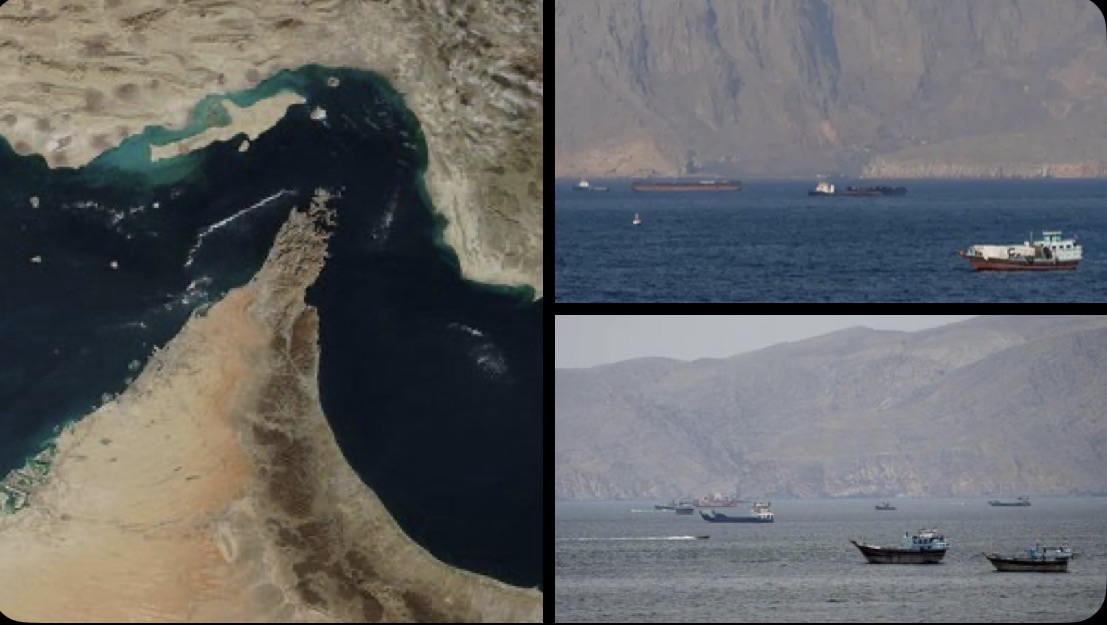
If Tasnim’s report holds up, and it is worth noting this is Iranian state media so independent verification still matters, then what we are looking at is a fundamental shift in how that waterway operates. The Strait of Hormuz is not just any stretch of ocean. Roughly 20% of the entire world’s oil supply moves through it every single day. Tankers carrying crude from Saudi Arabia, the UAE, Kuwait, Iraq, all of it squeezes through that narrow corridor between Iran and Oman before reaching global markets.
More Read

Iran has essentially placed a tollbooth at one of the world’s most critical economic chokepoints, and according to their own reports, it is working.
The implications spread fast. If shipping companies are quietly paying just to avoid confrontation, and honestly that is probably what happened, then Iran has found a revenue stream that sanctions cannot easily touch. It also sets a precedent. Other nations watching this are taking notes on what becomes possible when you control a strategic waterway and you are willing to enforce it.
The U.S. and allied navies have not responded in any way that suggests this has been stopped. And that silence says a lot.
More Read

Iran Just Painted Missiles Pink and Blue. Yes, Really. Here Is Why That Is Actually Worth Taking Seriously
You read that correctly.
Iran has reportedly painted a batch of its missiles pink and blue. Pink for girls, blue for boys. On the surface it sounds almost ridiculous, like something out of a gender reveal party that went in a very unexpected direction. But think about it for a moment, because the psychology behind this move is genuinely worth unpacking.
This is messaging, plain and simple. Iran is telling its own population and the watching world that this conflict is personal. It is not just about geopolitics or military strategy or oil revenues. They are framing it as something that touches every Iranian family, every child, every household. The missiles are no longer just weapons. They are symbols dressed in the colors of childhood and parenthood.
That kind of propaganda works internally. It takes something terrifying and turns it into something that feels like national pride, like protection, like we are doing this for our children. In a country where state media shapes the narrative and public sentiment needs managing during a prolonged conflict, that framing carries real weight.
But here is the other thing nobody should overlook. Iran is still talking about its missiles. Still putting them on display. Still making sure the world knows the arsenal exists, is active, and is apparently now available in new colors. The paint is unusual but the message underneath it has not changed. We have these. We will use them. We are not scared.
Whether this is psychological warfare, domestic propaganda, or just a remarkably bold PR moment from the Iranian military, one thing is clear. It is getting people talking. And in information warfare, that is very often the entire point.
More Read

Netanyahu Is Reportedly Looking at Turkey as a Future Target. Here Is Why Most Analysts Think That Would Be a Completely Different Kind of War
There has been growing chatter, including some fairly serious analysis, suggesting that if Israel concludes its campaign against Iran, Turkey could be next in its sights. Whether that reflects genuine strategic intent or aggressive posturing, it is worth examining why that idea is making serious observers uncomfortable.
Because Turkey is not Iran.
Start with the military. Turkey has spent the last decade quietly building one of the most capable and self-sufficient defense industries in the world. The Bayraktar drones are not prototypes. They have been tested in real combat in Libya, Azerbaijan, and Ukraine, and they have performed. Turkey now exports them globally, which means production volumes are high enough to sell the surplus.
Beyond drones, Turkey runs a modern air force with F-16s, has a serious naval presence in the Mediterranean, and is actively developing its own fifth-generation fighter jet. They are not waiting on foreign suppliers. They are building the capacity themselves.
Then there is the NATO membership, and this part cannot be brushed aside. Turkey has been in NATO since 1952. An attack on Turkey is structurally an attack on a 31-nation mutual defense alliance that includes the United States. Whether NATO would fully mobilize is a separate political question, but even the possibility of triggering that mechanism changes the entire risk calculation.
Israel and Turkey have had a complicated relationship for years. There have been moments of cooperation, moments of real tension, diplomatic ruptures and partial repairs. But there is an enormous distance between diplomatic friction and open military conflict with a NATO member that has serious weapons, serious production capacity, and a government that has shown willingness to use both.
Most analysts think engaging Turkey militarily would be a significant miscalculation. The international fallout alone would be unlike anything the region has seen in a very long time.
The Iran War Is Teaching Indonesia a Quiet but Serious Lesson and the Consequences Could Reshape Asian Trade for a Generation
Indonesia does not share a border with Iran. It is not a party to this conflict. But Jakarta is watching what is happening in the Middle East closely, and the conclusions it is drawing could quietly change how Southeast Asia trades, where it gets its energy, and how it positions itself in an increasingly divided world.
Here is the core problem. Indonesia is the largest economy in Southeast Asia, a major energy consumer, and a country that has built its foreign policy around a principle called bebas dan aktif, which translates to free and active. Stay non-aligned. Engage with everyone. Keep your options open. It has served Indonesia well for decades.
But the Iran situation is stress-testing that approach in ways that are hard to ignore.
When a country like Iran becomes the center of a major military conflict that disrupts shipping lanes and threatens energy flow through the Strait of Hormuz, staying comfortably neutral stops being an easy option. Indonesia imports significant volumes of energy. Any serious disruption to Middle Eastern supply chains pushes prices up and supply down, and that hits Indonesian consumers and industry directly.
The deeper lesson Jakarta is absorbing is about vulnerability. If a conflict thousands of miles away can threaten your energy supply, your import costs, and your export shipping routes at the same time, then your economy is more exposed than your foreign policy acknowledges. That is pushing Indonesian policymakers and business leaders toward diversification. More regional trade. Stronger ties with partners outside these geopolitical flashpoints. Faster investment in domestic energy and renewables.
There is also the shipping route dimension. A large portion of global cargo moving through the Strait of Hormuz eventually reaches Asian ports including Indonesian ones. If that route becomes more dangerous or more expensive, the trade math starts to change. Alternative routes become more attractive. Regional agreements gain more value.
Indonesia’s weight in ASEAN means its conclusions tend to echo across the region. If Jakarta quietly shifts its trade and energy strategy, expect Malaysia, Vietnam, the Philippines, and others to follow with their own versions of the same recalculation.
The Iran war looks like a Middle Eastern story. But its economic aftershocks are already writing a different chapter in Asia, and Indonesia is sitting right at the center of it.
All reports reflect available information at time of publication. Developing stories may be updated.