

Mamdani’s Comment During King Charles Royal Visit Draws Sharp Contrast With the Fiscal Crisis Now Consuming City Hall
A Mayor, a King, and a 177-Year-Old Diamond
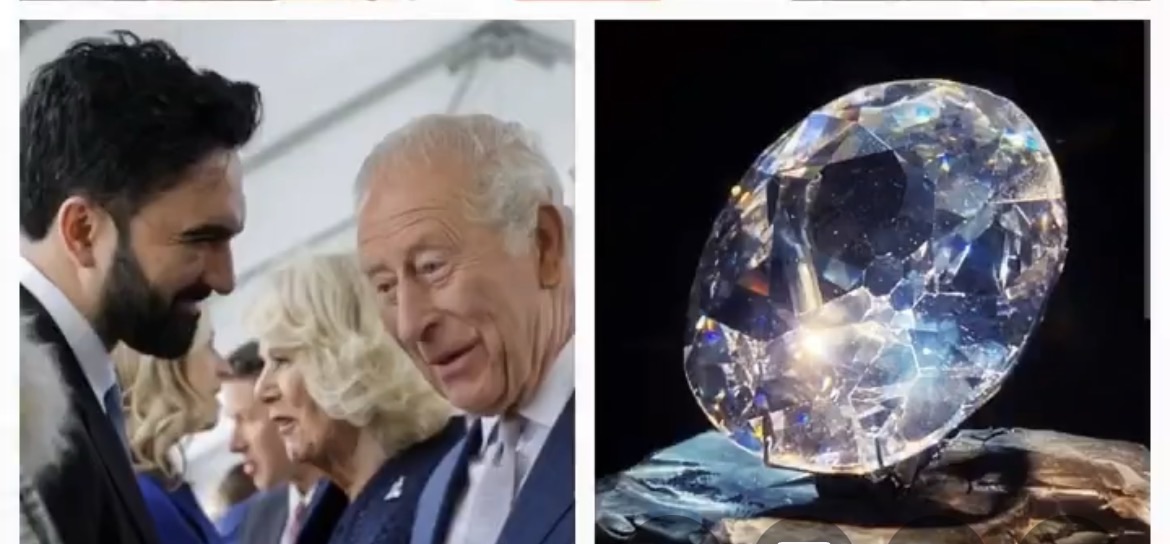
New York City Mayor Zohran Mamdani used a press conference Wednesday to call on King Charles III to return the Koh-i-Noor diamond to India, a remark that landed hours before he was set to greet the British monarch at the 9/11 Memorial, and one day after declaring a budget emergency of historic proportions at City Hall.
“I would probably encourage him to return the Koh-i-Noor diamond,” Mamdani said when reporters asked what he would say to King Charles in a private meeting.
The timing of the comment, and the contrast it cuts with the mayor’s own fiscal position, drew immediate attention.
What the Diamond Is, and Why It Has Always Been Contested
The Koh-i-Noor is not a minor piece of royal decor. The 105.6-carat jewel is set inside the Crown of Queen Elizabeth the Queen Mother and is believed to have originated in India. It was transferred to the British Crown in 1849 as a condition of the Treaty of Lahore, which ended the first Anglo-Sikh War.
India, Pakistan, and Afghanistan have each claimed ownership of the stone. Many Indians view it as colonial loot taken under duress, a position that has fueled diplomatic disputes for generations. Multiple British governments have refused repatriation requests, with the standard position being that returning the diamond would set a precedent requiring the emptying of museums and royal collections across the country.
Buckingham Palace declined to comment on Mamdani’s remarks.
The mayor did not elaborate further. His team moved to the next press question.
The Moment It Happened
King Charles III and Queen Camilla were visiting New York City on Wednesday as part of a four-day U.S. state visit focused in part on repairing strained ties between Britain and the United States, clouded by tensions over the Iran war. The royal couple laid a bouquet of white roses and a handwritten note at the 9/11 Memorial reflecting pools.
Mamdani’s Koh-i-Noor comment came roughly two hours before he was expected to greet the king and queen at the memorial wreath-laying ceremony. The two were later seen shaking hands.
The mayor had been asked what he would say to Charles in a hypothetical private meeting. He initially deflected the question, but when pressed by reporters, he offered the diamond remark. He did not elaborate.
The Budget Context That Framed the Comment Differently
Whether or not one finds the Koh-i-Noor question a legitimate diplomatic priority, the timing placed it in an uncomfortable frame for an administration already under pressure over its handling of city finances.
One day before the royal visit, Mamdani stood at City Hall and described New York City as facing a crisis he called unprecedented in scale. The mayor outlined what his office termed the “Adams Budget Crisis,” citing a $12 billion shortfall across fiscal years 2026 and 2027, driven by what he described as years of staggering mismanagement by the previous administration. He pointed to programs such as cash assistance, budgeted at $860 million by Adams but now projected to cost nearly $1.7 billion.
Mamdani declared the deficit “larger than any since the Great Recession,” and acknowledged the city cannot close the gap through savings alone, calling for new revenue from Albany and a structural reset in the city’s financial relationship with the state.
The executive budget deadline, originally set for May 1, was pushed back to May 12, the first time the city has missed that marker since 2015.
The transit system, which tens of millions of commuters depend on daily, continues to face its own capital shortfall. Housing affordability, which Mamdani himself has called a “moral emergency,” remains unresolved at scale.
Two Conversations Happening at Once
Critics did not wait long to connect the two events. The juxtaposition, a mayor warning of historic fiscal disaster one day while using media time the next to weigh in on a 177-year-old British colonial dispute, gave Mamdani’s opponents a ready-made narrative.
The administration would likely argue these are not mutually exclusive concerns, that a mayor can greet a foreign dignitary and field a reporter’s hypothetical without neglecting the budget. It is also worth noting that Mamdani did not corner King Charles to deliver a formal demand. The comment came in response to a direct question from the press, and was three sentences long.
But in politics, optics are rarely about what was intended. A mayor who declared a historic budget emergency on Tuesday, then used his public moment on Wednesday to call for the return of colonial-era jewellery, will have to live with how that sequence reads, whether or not the sequence was of his own choosing.
Mamdani has said his administration will not allow working New Yorkers, who did not cause the crisis, to become victims of its solution. The harder test is whether he can demonstrate that his attention, and the city’s political energy, is being allocated to match that commitment.
Buckingham Palace did not respond. The diamond remains in the Tower of London.
Mayor Mamdani’s office did not provide additional comment beyond the press conference remarks. King Charles III’s U.S. visit continues through this week.