

JERUSALEM | Israeli Prime Minister Benjamin Netanyahu has confirmed he wants Israel to completely end its dependence on US military aid within the next decade, a statement that has sent shockwaves through Washington’s foreign policy establishment and reignited a decades-old debate about the nature of the US-Israel relationship.
The announcement is being framed by Netanyahu as a sign of Israeli strength and maturity. Critics say the timing tells a different story entirely.
What Netanyahu Said
In an interview with The Economist conducted in Jerusalem, Netanyahu made his position explicit for the first time in a formal public setting.
“I want to taper off the military aid within the next ten years,” Netanyahu told the magazine’s editor-in-chief Zanny Minton Beddoes. When asked directly if he meant tapering it to zero, Netanyahu said yes.
Netanyahu framed the move as a natural evolution of Israel’s development as a nation. “We’ve come of age and we’ve developed incredible capacity,” he said. “Our economy, which will certainly reach within a decade about a trillion dollars, it’s not a huge economy, but it’s not a small economy.” He added that he told President Trump at their December meeting at Mar-a-Lago that Israel “very deeply appreciates the military aid that America has given us over the years” but that the country no longer needs to depend on it.
More Read
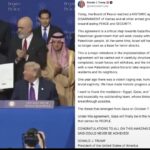
This is not the first time Netanyahu has floated the idea. In a cabinet meeting last May, he told ministers that “we will have to wean ourselves off of American security aid.” He made similar comments to conservative commentator Ben Shapiro in October and to Australian journalist Erin Molan in November. But the Economist interview elevated the statement from political signalling to formal policy intent.
“I am committed to making Israel as fully self-sufficient as possible,” Netanyahu told Shapiro. “We can transform our military defense industry, make a quantum jump to be able to be self-sufficient and to share with America the extraordinary developments that we have.”
What Is Actually at Stake
To understand why this matters, you need to understand the scale of what Israel currently receives.
More Read
Under a 10-year Memorandum of Understanding negotiated during the Obama administration in 2016, Israel receives approximately $3.8 billion in US security assistance annually through 2028. That breaks down as $3.3 billion in Foreign Military Financing, essentially subsidised access to American-made weapons, and $500 million earmarked specifically for joint missile defense programs including Iron Dome, David’s Sling, and the Arrow system.
Israel is by a significant margin the largest recipient of US military aid over the past 80 years. The current MOU is set to expire in 2028, and negotiations for the next package, which would take effect in 2029, are already underway. Netanyahu’s statement effectively means Israel does not intend to seek a full renewal of the arrangement.
Notably, Israel is unique among US aid recipients in that it is allowed to use a portion of its Foreign Military Financing for domestic procurement rather than being required to spend it entirely on American defense products. That domestic procurement benefit is already set to be phased out by 2028 under the current MOU’s terms, a detail that shapes the strategic backdrop of Netanyahu’s announcement.
Trump Was Not on Board at First
Despite the public framing of this as a mutual decision between allies, the reality behind closed doors was considerably more complicated.
According to two sources familiar with the matter who spoke to Jewish Insider, when Netanyahu pitched the aid phase-out plan to Trump during their December meeting at Mar-a-Lago, Trump was bewildered and did not immediately support the move. The sources said Trump pushed back on Netanyahu’s claims about the wisdom of the proposal.
The idea was originally spearheaded by Ron Dermer, Israel’s former minister of strategic affairs and one of Netanyahu’s closest advisors. Dermer has been making the case to US lawmakers and officials that phasing out the aid would improve Israel’s reputation in the United States. Since Dermer left government, Israeli Ambassador to the US Yechiel Leiter has taken over as the primary point of contact on the issue.
More Read

Netanyahu has since moved ahead with announcing the plan publicly regardless of Trump’s initial reservations. One source told Jewish Insider that Netanyahu even suggested Israel may not take or could return some of the military aid it is scheduled to receive from the US in 2027 and 2028 under the existing MOU.
The Congressional Reaction
Senator Lindsey Graham, a longtime pro-Israel stalwart and Chair of the Senate Appropriations Subcommittee on State, Foreign Operations and Related Programs, responded to Netanyahu’s interview by going even further than the Israeli prime minister.
“We need not wait ten years,” Graham wrote on X, saying he committed to presenting a proposal to Israel and the Trump administration to “dramatically expedite the timetable” for ending the aid. Graham argued that terminating the aid would save US taxpayers billions that could then be “plowed back into the US military.”
The political dynamics behind that position are significant. The broad bipartisan support for military aid to Israel that once existed in Washington has been fracturing for years. Netanyahu’s proposal arrives at a moment when both sides of the aisle, for very different reasons, are increasingly open to reconsidering the arrangement.
What Netanyahu Gets Out of This
The strategic logic from Israel’s side is straightforward, even if the timing is contested.
Netanyahu has long argued that Israel should build toward full military self-sufficiency. His government has set an ambition to boost defense spending by $80 billion over the next decade above prewar levels, targeting a defense budget of 6% of GDP, up from 4.4% in 2022. Israeli defense industries have become increasingly sophisticated, and the country has positioned itself as a major global arms exporter in its own right.
There is also a domestic political calculation. Continued dependence on US military aid has become a source of vulnerability for Netanyahu, both internationally and within Israeli politics. By reframing the aid relationship as something Israel is choosing to walk away from on its own terms, he converts a potential liability into a display of national confidence.
Haaretz, in a sharp analysis, argued that Netanyahu is “trying to spin his failure as success,” suggesting the move is less about Israeli strength and more about preempting what Israeli officials see as an inevitable shift in American political support, particularly as negotiations for a new MOU that would take effect in 2029 have already begun.
The Broader Context
Netanyahu’s announcement sits within a much larger reconfiguration of US-Israel relations that has accelerated since the start of the Iran war.
The ongoing US-Israel military campaign against Iran, now well into its second month, has consumed enormous quantities of American military resources and political capital. The Strait of Hormuz remains effectively closed, oil prices hit $104 per barrel today on news that peace proposals between Washington and Tehran have again been rejected, and the global economic fallout from the conflict continues to deepen.
In that environment, the question of how much the United States is willing to continue subsidising Israel’s defense needs is no longer purely theoretical. It is a live political debate with real consequences for both countries’ domestic audiences.
For Netanyahu, presenting Israel’s path to military independence as a deliberate, confident choice rather than a forced adaptation to changing American politics is a significant reputational move, whatever the underlying motivations.
What Comes Next
The immediate practical question is what happens to the 2029 MOU negotiations. Those talks are already underway, and Netanyahu’s public position now shapes what Israel will and will not accept at the table. Israel is reportedly pressing for a 20-year commitment totaling at least $76 billion in US weapons under any new arrangement, though with a shift away from direct Foreign Military Financing toward more joint co-development and co-production programs.
That distinction matters. Moving from direct aid to joint programs does not necessarily reduce US-Israel military entanglement. It changes the financial structure while potentially deepening the technological and industrial relationship between the two countries’ defense sectors.
Whether Trump ultimately embraces or resists the shift will likely be influenced by how the Iran conflict develops in the coming weeks, including the upcoming Trump-Xi summit in Beijing on May 14 and 15, where China’s position on Iran and the path to reopening the Strait of Hormuz will be a central agenda item.
Briefly USA will continue covering developments in the US-Israel-Iran conflict. For the latest updates follow our Trending section.
For related coverage read: