

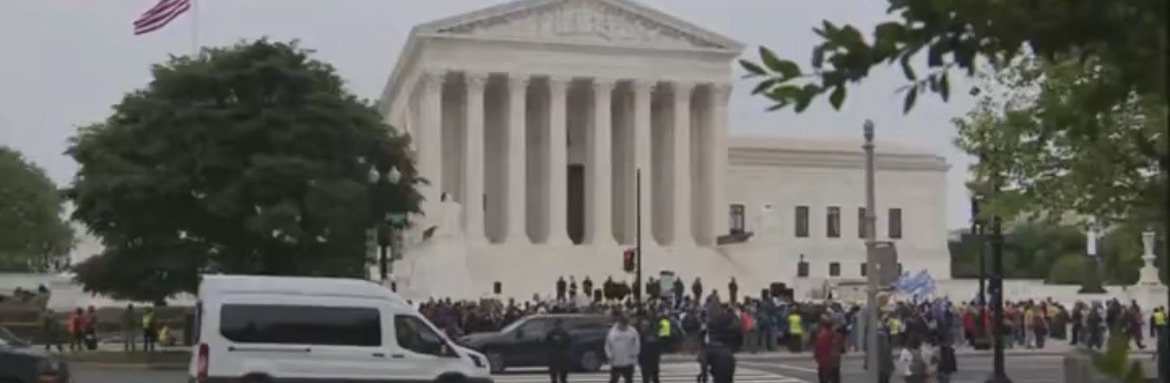
WASHINGTON — The U.S. Supreme Court delivered a major decision on redistricting Wednesday, ruling 6-3 that Louisiana’s congressional map, which included a second majority-Black district drawn to comply with the Voting Rights Act, amounts to an unconstitutional racial gerrymander.
In an opinion written by Justice Samuel Alito, the conservative majority held that the state’s 2024 map violated the Equal Protection Clause of the 14th Amendment because race predominated in the drawing of the district without sufficient justification. The Court left Section 2 of the Voting Rights Act intact but sharply limited how it can be used to require the creation of additional majority-minority districts.
The ruling means Louisiana must redraw its congressional map before the 2026 midterms. It also sends a strong signal to other states that using race as the predominant factor in drawing districts, even to comply with the Voting Rights Act, faces strict constitutional limits.
What the Court Actually Decided
The case, Louisiana v. Callais, centered on whether the state went too far when it created a second majority-Black congressional district after a lower court found the previous map likely violated Section 2 of the Voting Rights Act. Challengers argued the new map was an impermissible racial gerrymander that sorted voters primarily by race rather than by traditional districting principles such as compactness and respect for political boundaries.
The Supreme Court agreed with the challengers. The majority concluded that the Voting Rights Act did not actually require Louisiana to draw the additional district in the way it did. Because there was no compelling interest that justified the heavy use of race, the map failed strict scrutiny and violated the Constitution.
The decision was split along ideological lines, with the six conservative justices in the majority and the three liberal justices dissenting. Justice Elena Kagan wrote the dissent, joined by Justices Sonia Sotomayor and Ketanji Brown Jackson. She argued that the ruling effectively guts the ability of Section 2 to protect minority voting power in redistricting cases.
Background on Louisiana’s Map and the Voting Rights Act
For years, civil rights groups and Democratic plaintiffs have used Section 2 of the Voting Rights Act to challenge maps they say dilute the voting strength of Black and other minority voters. In Louisiana, where Black residents make up about one-third of the population, lawsuits argued that the state should have two districts where Black voters could elect candidates of their choice instead of just one.
After a federal court sided with those claims, the Louisiana legislature drew a new map with two majority-Black districts. Non-Black voters then sued, claiming the map was an unconstitutional racial gerrymander.
The Supreme Court’s ruling today throws out that map. It does not eliminate Section 2 entirely, but it makes it much harder for plaintiffs to successfully demand new majority-minority districts in future cases. The decision emphasizes that race cannot be the dominant consideration and that traditional redistricting criteria must take priority.
Potential Impact on the 2026 Midterms and Beyond
The immediate effect is clear in Louisiana. The state will need to redraw its six congressional districts without the second majority-Black seat. This change is expected to favor Republican candidates and could cost Democrats a seat.
Looking more broadly, the ruling could influence redistricting battles in other states with sizable Black or Hispanic populations. Analysts have suggested that if the logic is applied aggressively, it might put pressure on several districts currently held by Democrats that were drawn with significant attention to racial demographics.
However, the decision stops short of the most sweeping outcome some had feared or hoped for — a full invalidation of Section 2. The Court appears to have chosen a narrower path that limits race-conscious map drawing while preserving the core of the 1965 law for now.
Still, the practical consequences could be significant. States controlled by Republicans may feel emboldened to draw maps with less concern about creating additional majority-minority districts. Civil rights organizations, on the other hand, warn that the ruling will make it harder to combat vote dilution and could reduce minority representation in Congress over time.
Reactions and What Comes Next
Republicans largely welcomed the decision as a victory for color-blind districting and an end to what they called racial gerrymandering by Democrats. They argue the ruling restores traditional principles to the redistricting process and prevents courts from forcing states to prioritize race over other factors.
Democrats and voting rights advocates condemned the outcome. They described it as another step in the weakening of the Voting Rights Act and warned it could lead to a decline in Black and minority representation, especially in Southern states.
Louisiana officials must now move quickly to produce a new map that complies with the ruling. With 2026 midterm deadlines approaching, any delay could create legal and logistical complications.
The decision adds another layer to the already complex landscape heading into the midterms. Redistricting fights have become central to partisan battles, and this ruling gives states more flexibility while tightening the constitutional constraints around race.
For the Supreme Court, the case represents another chapter in its ongoing effort to define the proper role of race in American public life, from affirmative action to voting maps. The 6-3 split underscores how divided the justices remain on these sensitive questions.
As states begin assessing the impact, the focus will shift to how legislatures redraw lines and whether new lawsuits emerge under the tighter standards set today. The ruling does not end litigation over redistricting, but it does change the rules of the game in important ways.