

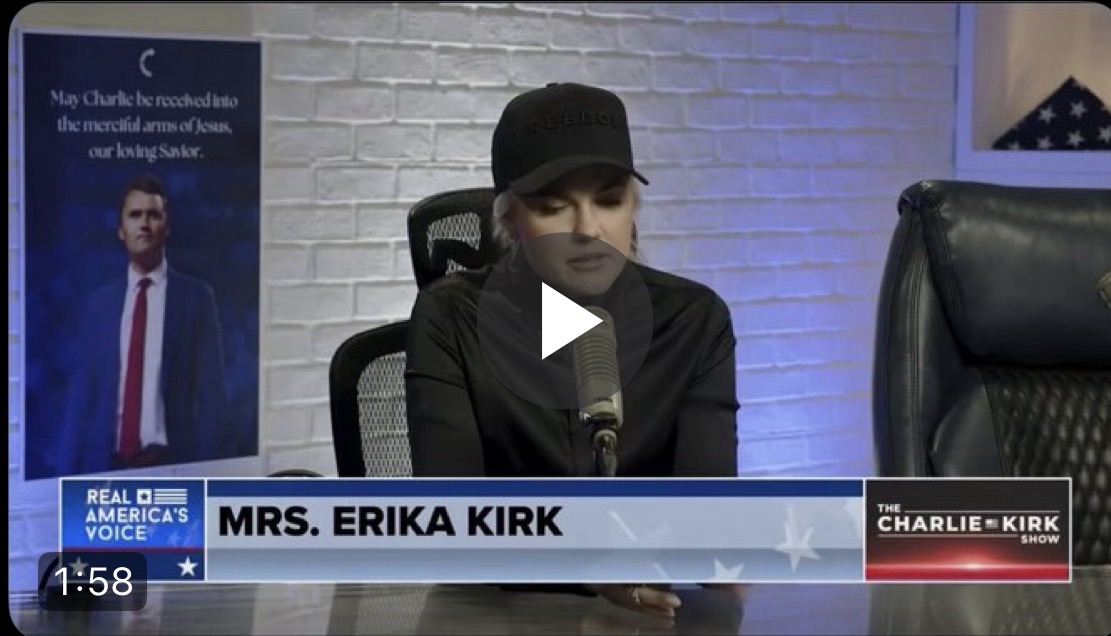
WASHINGTON — Erika Kirk, widow of conservative activist Charlie Kirk, sharply criticized members of the media for continuing to film and record video clips while an active shooter situation unfolded at the White House Correspondents Dinner on Saturday night.
In a video interview that has since circulated widely, Kirk described the scene as “utter chaos” and expressed disbelief that journalists were focused on capturing footage rather than seeking immediate safety. She noted that reporters appeared more concerned with getting usable clips than with the potential danger to themselves and others in the room.
“It was just utter chaos,” Kirk said. “During an active shooting, these journalists are using their phones to find moments to capture for clips. They were so concerned about getting a video in a room with an active shooter that they could have accidentally and quite literally filmed themselves being shot.”
The incident occurred when a gunman was subdued by Secret Service agents inside or near the event venue. Video from inside the ballroom showed moments of panic, with some attendees ducking under tables while others continued recording on their phones. Kirk’s comments have sparked heated debate online about media behavior during breaking news events involving violence.
The Context of the White House Correspondents Dinner Incident
The White House Correspondents Dinner is an annual event that brings together journalists, politicians, and celebrities. This year’s gathering was already politically charged, coming amid ongoing tensions between the Trump administration and segments of the mainstream press.
When the shooter alert was issued, the room experienced a sudden disruption. Andrew Kolvet, a spokesman for Turning Point USA, also shared video from inside the event showing the immediate aftermath. While most attendees sought cover or followed security instructions, some reporters and attendees kept their phones raised to document the moment.
Kirk’s criticism focused on what she sees as a prioritization of content creation over personal safety and basic human instinct during a life-threatening situation. She suggested that the drive for viral clips had overtaken journalistic judgment and common sense.
Broader Debate on Media Behavior in Crisis Moments
Kirk’s remarks tap into a long-running conversation about how modern media operates in the age of smartphones and social platforms. In today’s environment, journalists and bystanders often instinctively reach for their phones to record events as they unfold. This practice has produced some of the most powerful and important footage in recent history, from protests to natural disasters.
However, critics argue that during active shooter situations or other high-risk incidents, continuing to film can distract from survival priorities and even endanger others. Security experts have noted that holding up a phone can make someone a more visible target and slow down evacuation efforts.
Defenders of the journalists point out that documenting unfolding news is part of their professional duty. When a major story breaks in real time, especially one involving potential violence at a high-profile Washington event, capturing accurate footage becomes essential for public information. Several reporters have defended their actions, saying they were trying to provide transparency while staying as safe as possible.
The debate has played out intensely on social media, with some users accusing Kirk of hypocrisy given past Turning Point USA events and media coverage, while others praised her for calling out what they see as reckless behavior by the press.
Erika Kirk’s Perspective After Charlie Kirk’s Assassination
This is not the first time Erika Kirk has spoken publicly since the assassination of her husband, Charlie Kirk, in September 2025. She has become more visible in conservative circles, often addressing issues of media bias, cultural decay, and personal loss.
Her comments at this event carry added weight because of her own experience with political violence. Supporters see her as someone who understands the real human cost of such incidents and is unafraid to criticize what she views as performative or self-serving actions by the media.
Critics, however, have pushed back, noting that some Turning Point-affiliated individuals were also recording during the incident. Others have questioned the timing and tone of her remarks so soon after a chaotic and frightening night for everyone involved.
What This Reveals About Media and Politics Today
The exchange highlights deeper divisions in how Americans view the press. Many conservatives believe mainstream journalists often prioritize narrative and drama over facts and safety. A significant portion of the public has grown skeptical of traditional media institutions, viewing them as more interested in clicks and viral moments than in responsible reporting.
At the same time, professional journalists argue that bearing witness — even in dangerous situations — is a cornerstone of a free press. The presence of cameras and phones ensures that powerful institutions cannot hide misconduct or downplay threats.
The incident at the Correspondents Dinner adds another chapter to the strained relationship between the Trump administration, conservative activists, and the Washington press corps. With midterm elections approaching in 2026, these cultural and media battles are likely to intensify.
For now, Erika Kirk’s blunt criticism has reignited conversations about journalistic ethics during crises. Whether her remarks lead to any meaningful self-reflection within the media or simply deepen existing partisan divides remains to be seen.
As video from the event continues to circulate, the public will continue to form its own opinions about how journalists, attendees, and public figures behaved under pressure. In an era where everyone with a smartphone can act as a reporter, the line between documenting history and endangering oneself has never been more blurred.